

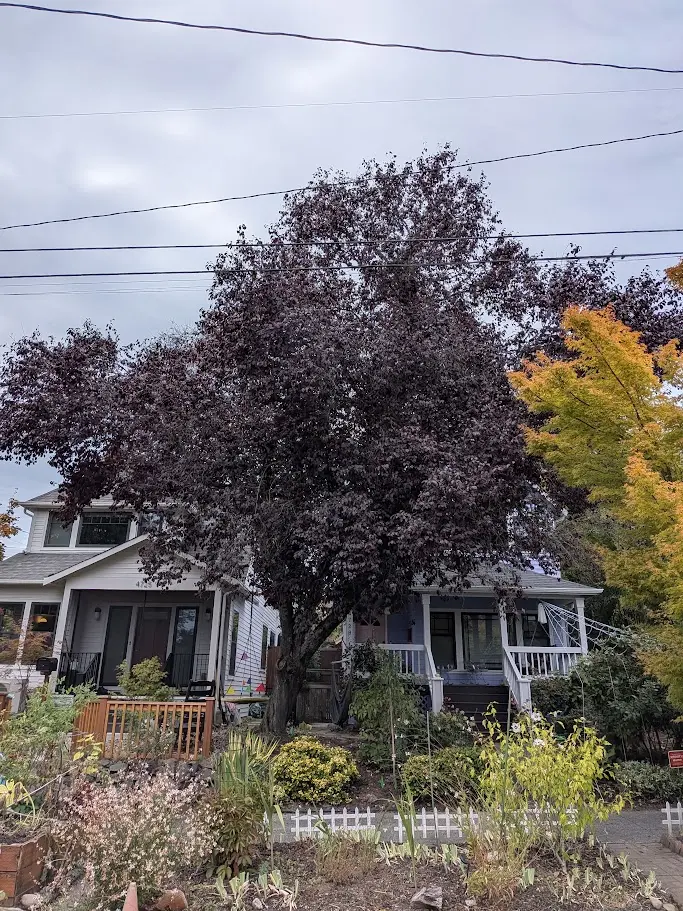
Why do trees around Andover Hill need special attention?
Phillips Academy, founded in 1778, sits on Andover Hill just south of the town center, and the residential streets around it, including the Bancroft area, are among the most established in town. Many properties have heritage trees: large oaks, maples, beeches and elms that have shaded the same homes for generations. Owners here usually want one thing above all: to keep those trees healthy and standing as long as safely possible.
That makes stewardship the priority. Regular inspection, plant health care, disease monitoring and careful structural work keep big trees going for decades. This page explains how our tree pruning company in Andover approaches heritage trees in this part of town.
Which services do heritage trees need?
Plant health care and monitoring
Older trees are more sensitive to soil compaction, root damage and drought. A plant health care program tracks each tree’s condition over time, improves the root zone and catches pests early, while treatment still works.
Disease management
Beeches, oaks, elms and ornamental trees each face specific diseases. Tree disease management starts with accurate diagnosis, so treatment targets the real problem.
Crown reduction and structural pruning
As large trees age, long limbs grow heavier and weak points develop. A careful crown reduction lowers the load, and structural pruning removes deadwood and crossing branches without changing the tree’s character.
Cabling for valued trees
Where a prized tree has a weak fork, cabling and bracing can add years of safe life.
Which diseases threaten heritage trees here?
Beech leaf disease
American and European beeches are common in established Andover landscapes, and beech leaf disease has been confirmed in Massachusetts. Dark bands between leaf veins are the early sign. Because beeches are often the showpiece trees on older properties, early detection matters. Our beech leaf disease guide explains what to look for.
Dutch elm disease
Surviving American elms are rare and valuable. Preventive injections can protect healthy elms, and any wilting branch should be checked quickly.
Oak wilt and anthracnose
Oaks should be pruned only while dormant to avoid oak wilt. Maples and oaks also see anthracnose after cool, wet springs, which is usually cosmetic but adds stress to older trees.
What other problems affect older trees?
- Root zone stress: paving, renovations and foot traffic compact soil around old roots
- Decay and cavities: old wounds that need periodic checking
- Weak unions: included bark in mature forks
- Girdling roots: roots wrapping the trunk base, often hidden under soil or mulch
- Deadwood over walkways: heavy, brittle limbs on large crowns
Keep a tree recordFor heritage trees, a simple record of inspections, treatments and pruning dates makes every future decision easier, and it adds value when the property changes hands.
A checklist for Andover Hill properties
- Check beech leaves in early summer for dark bands between veins.
- Look for wilting or yellowing branches on elms.
- Note deadwood over paths, driveways and sidewalks.
- Look at the trunk base for buried flares, mulch piles or mushrooms.
- Avoid digging, trenching or parking near the roots of old trees.
Planning for the next generation
Even the best-cared-for trees eventually decline. Planting younger trees nearby before an old one has to come down keeps the canopy continuous. Choosing diverse, long-lived species, such as oaks, lindens, tupelo and disease-resistant elms, builds resilience. Our guide to common trees of Andover covers how local species age and what they need.
Call to set up an inspection and a long-term care plan for your trees.
What does a heritage tree assessment include?
For large, old trees, a basic look from the ground isn’t enough. A thorough assessment covers the root collar (often excavated to look for girdling roots and decay), the trunk (sounded for hollow areas), each major union (checked for included bark and cracks), and the crown (checked for deadwood, dieback and leaf symptoms). Where a tree’s future depends on it, decay-detection tools can estimate how much sound wood remains.
The outcome should be a clear picture: what condition the tree is in, what risks it carries, and what care would keep it safe. That might be a light deadwood prune and annual monitoring, a reduction and cable, a soil care program, or, occasionally, the honest advice that the tree is near the end of its safe life. For owners who value their trees, that clarity is worth more than any single treatment.
Why does the soil matter so much for old trees?
Most of a mature tree’s feeding roots live in the top foot of soil and spread far beyond the canopy. On established properties, decades of lawn care, paving and foot traffic compact that soil and squeeze out air. Loosening compacted soil with an air spade, replacing turf near the trunk with a wide mulch ring, and correcting buried root flares can noticeably improve an old tree’s vigor within a few seasons.
Simple habits help too: water old trees deeply during long dry spells, keep cars and heavy deliveries off the root zone, and ask contractors to protect trees before any work begins.
Nearby neighborhoods
The Andover Hill area connects directly to Andover Center, and it’s close to historic Shawsheen Village and the larger lots of South Andover.
Andover Hill tree service FAQs
How often should heritage trees be inspected?
At least once a year, plus after major storms. Older trees can change quickly as decay or disease develops.
Can beech leaf disease be treated?
There’s no proven cure, but early detection, good care and some emerging treatments can slow decline. Monitoring is essential.
Is my old elm worth protecting?
Healthy American elms are increasingly rare. Preventive treatment can protect them from Dutch elm disease.
Can renovations harm my old trees?
Yes. Root damage from excavation, paving or heavy equipment is a leading cause of decline in older trees. Protect root zones before work starts.
What is a girdling root?
A root that wraps around the trunk base, slowly strangling it. Root collar excavation can expose and correct it.