
What is crown reduction?
Crown reduction is a pruning technique that reduces a tree’s height or spread by cutting branches back to a living lateral branch that is large enough to take over as the new tip. The rule of thumb is that the remaining branch should be at least one third the diameter of the limb removed. That keeps the cut small enough to seal and leaves a natural, rounded crown rather than a row of stubs.
The goal is less weight and leverage, not a dramatically different tree. A well-done reduction is often hard to spot from the street: the tree simply looks a little tighter and better balanced. It is one of the most useful tools in Andover tree pruning work because so many mature trees here have outgrown the space they were planted in.
Crown reduction vs. topping: what’s the difference?
This is the most important distinction on this page. Topping cuts branches to arbitrary stubs, usually at a set height, with no regard for where living branches are. The stubs can’t seal properly, decay moves in, and the tree responds with dense clusters of fast-growing sprouts that are weakly attached. Within a few years a topped tree is taller, bushier and more dangerous than before.
Crown reduction works with the tree’s own structure. Each cut goes back to a branch that can take over, the amount removed in one season is limited, and the tree keeps enough leaves to feed itself. If anyone offers to "top" a tree, ask for a reduction instead, or ask whether removal would be the more honest option.
| Crown reduction | Topping | |
|---|---|---|
| Where cuts go | Back to a strong living branch | Anywhere, often to a stub |
| Wound sealing | Small cuts that close well | Large stubs that decay |
| Regrowth | Normal, well attached | Dense, weakly attached sprouts |
| Long-term risk | Lower | Higher |
| Industry standard | Follows ANSI A300 | Not an accepted practice |
When does a tree need crown reduction?
Reduction is the right call when a tree is basically healthy but too big for its situation. Common reasons include:
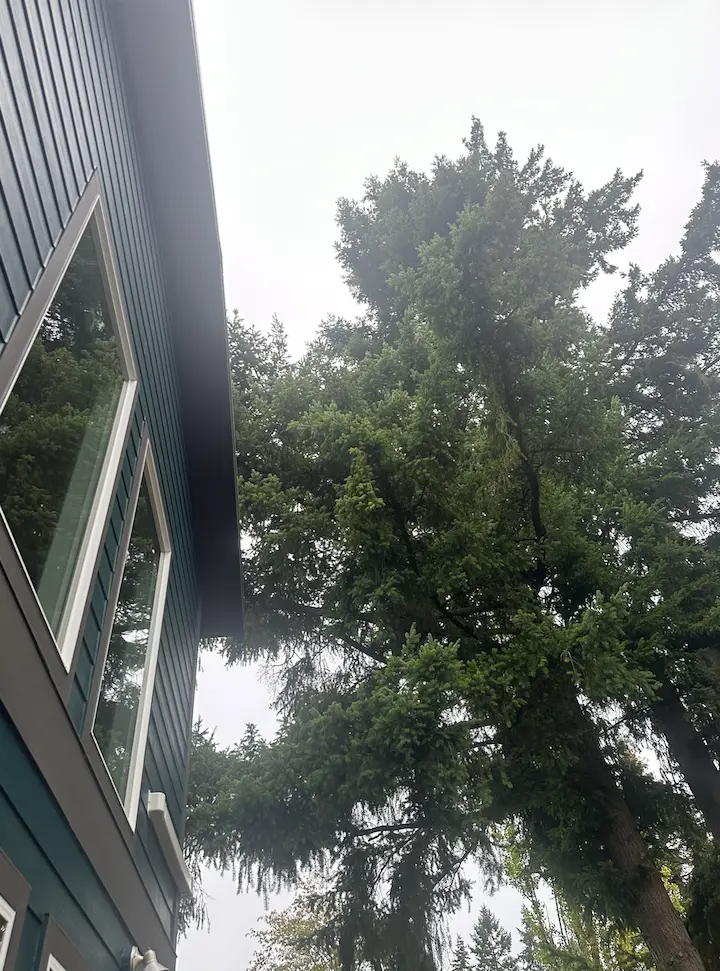
- Long limbs extending over the roof, a pool or a neighbor’s house
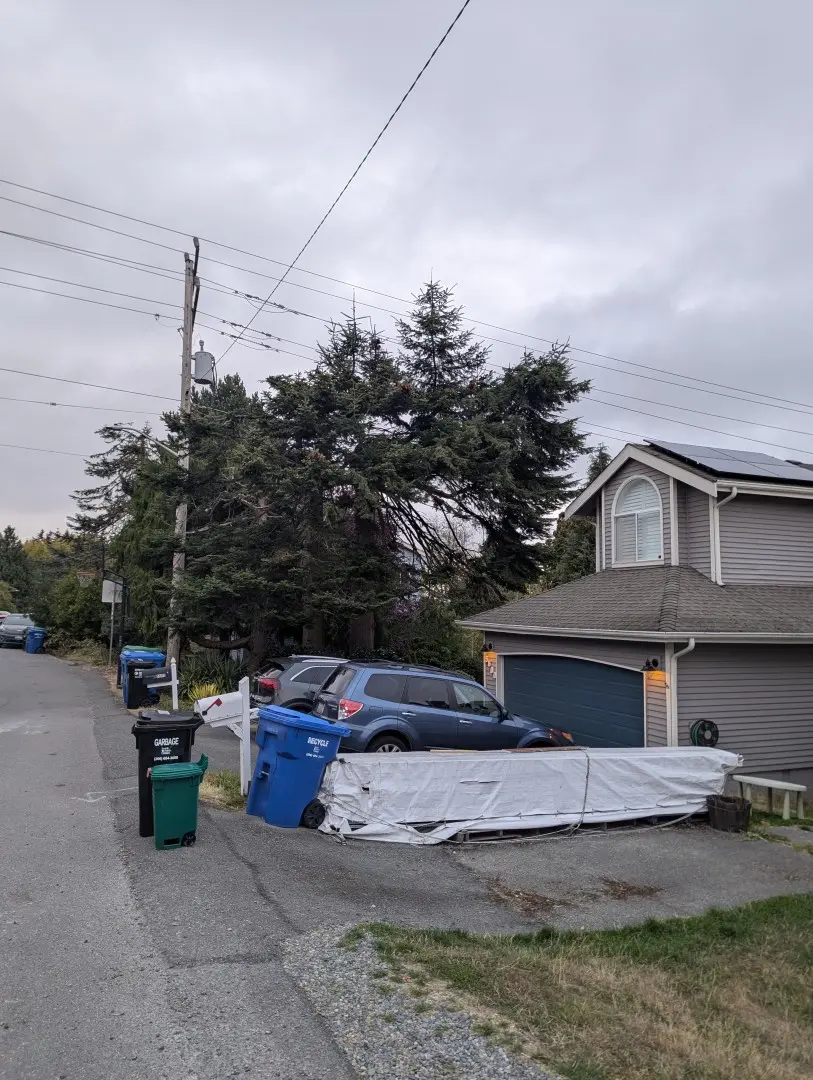
- A crown that has grown into service wires or close to the chimney
- Heavy end weight on a limb with a known weak point
- A tree leaning toward a target, where weight on that side needs to come off
- Co-dominant stems that need less load before or alongside tree cabling
- Recovering a tree that lost part of its crown to storm damage
- Views or solar exposure that a modest size reduction can restore
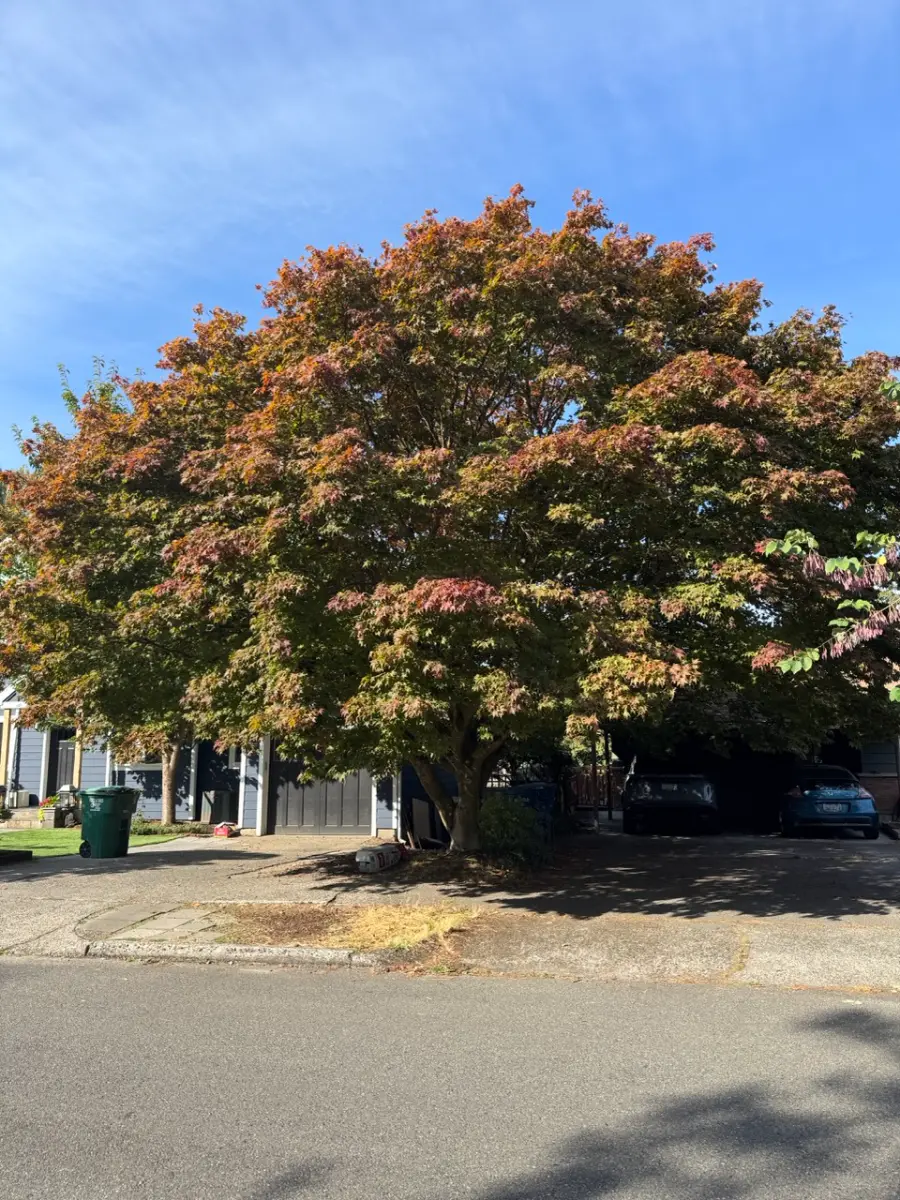
- Keeping a large tree in scale with a small lot, common in older neighborhoods
Which trees respond well to reduction?
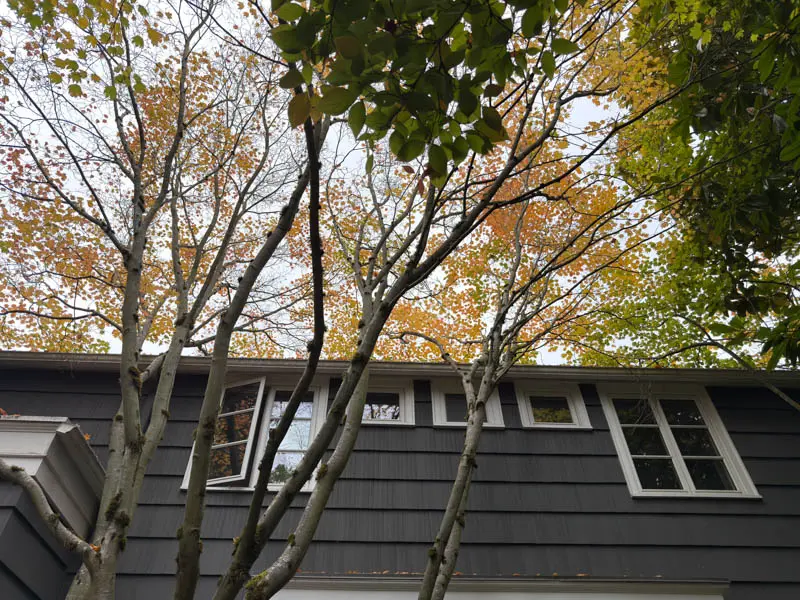
Most hardwoods common in Andover, including red and sugar maple, oaks, lindens, honeylocust and many ornamentals, respond well when reductions are moderate. Trees that are already stressed, heavily decayed or declining from pests are poor candidates, because removing leaf area takes away the energy they need to recover. Conifers like white pine and hemlock generally can’t be reduced the same way; they’re thinned and cleaned instead.
Beeches and oaks deserve special care here. With beech leaf disease spreading in Massachusetts and oak wilt a threat to oaks, timing and the amount removed matter even more. Our tree disease management page explains how disease changes the plan.
How does reduction fit into long-term care?
A reduction is rarely a one-time event. Once a tree has been brought back into scale, light maintenance every few years keeps it there with small cuts instead of large ones. That cycle is the cheapest and healthiest way to live with a big tree close to the house.
For a mature tree with a known weak point, reduction is often paired with other work. Lightening a heavy limb first and then fitting a cable spreads the remaining load, and some trees benefit from soil care or plant health care afterward to support new growth. The order matters: support systems are sized to the crown that remains, so reduction usually comes first.
Keep notes, or ask for a written record, of what was done and when. It makes the next visit faster and helps anyone who buys the house understand the tree’s history. It’s also useful when a storm hits, because you’ll know which trees have already been lightened and which are still carrying full crowns.
Why is crown reduction common in Andover?
Many of Andover’s streets were planted generations ago, and the maples and oaks that once framed small front yards now tower over rooflines. Add heavy wet snow, ice and nor’easter winds, and a large, unbalanced crown becomes a real liability. Reduction lets owners keep that mature canopy while trimming the risk it carries each winter.
What causes trees to outgrow their space?
Usually it’s simple: a tree that looked small at planting matures into a 60 or 70 foot shade tree. Silver maples and Norway maples planted in the mid-1900s are classic examples. Other causes include one-sided growth toward light after a neighboring tree was removed, years without maintenance pruning, and previous topping that produced a tangle of heavy sprouts. Storms also leave lopsided crowns that need rebalancing.
How much of the crown can be removed?
Generally no more than about 25 percent of the living crown in a single growing season, and often less for mature or sensitive species. If a tree needs a bigger change, the reduction is phased over two or three dormant seasons. Asking for "half off the top" in one visit is how trees end up topped.
Ask what will be left, not just what comes offA good quote describes the result: "reduce the east side by about 6 feet back to laterals" is far more useful than "cut back tree."
What can you check before calling?
From the ground, note which limbs worry you and what is underneath them. Measure or estimate how far branches extend over the roof. Look for cracks at major forks and any mushrooms at the base, which could mean the tree needs more than a reduction. Photos from two or three sides help a lot.
Big limbs are heavyLarge limbs weigh hundreds of pounds and swing unpredictably when cut. Reduction work on mature trees needs a trained climber, rigging and rope-lowering. It isn’t a DIY job.
How is a crown reduction done?
- Assess the treeHealth, decay, weak unions and the species’ tolerance for pruning are checked first.
- Set the target sizeYou agree on how much clearance or weight reduction is needed and where.
- Select the cutsEach branch is traced back to a suitable lateral, about one third its size or more.
- Rig and lowerLarger sections are tied off and lowered by rope so nothing drops onto the roof or garden.
- Balance the crownThe climber steps back to check the overall shape and evens out the sides.
- Plan the follow-upBig changes are scheduled over several seasons, and regrowth is reviewed in a few years.
What affects the cost of crown reduction?
| Factor | Why it matters |
|---|---|
| Height and spread | More crown to reach means more climbing and rigging time. |
| Targets underneath | Roofs, decks and wires require controlled lowering. |
| Amount of reduction | A light rebalance is quicker than a phased reduction. |
| Access for equipment | A lift can speed work; tight backyards may require climbing only. |
| Tree condition | Decay or storm damage slows work and adds safety steps. |
When is reduction urgent?
If a long limb has cracked, is resting on the roof, or the tree has begun leaning after a storm, it’s no longer a scheduled reduction; it’s a hazard. Keep people clear and call promptly. In some cases a failing tree can’t be made safe by pruning, and tree removal is the responsible option.
Talk through a crown reduction plan that keeps the tree and protects your home.
Where we do crown reductions in Andover
Reductions are especially common in Shawsheen Village and the established streets around the Phillips Academy area, where large shade trees stand close to older homes. They’re also a regular part of storm preparation for big oaks on the larger lots of South Andover.
Crown reduction FAQs
Will crown reduction kill my tree?
Not when done correctly. Moderate reductions to proper laterals are well tolerated by healthy trees. Heavy, one-time cuts or topping are what cause decline.
How long does a crown reduction last?
Usually three to five years before regrowth needs attention, depending on the species and how vigorous the tree is.
Is reduction better than removal?
When the tree is healthy and structurally sound, yes. It keeps the shade and value of a mature tree. If the trunk or roots are failing, removal is safer.
When is the best time for a crown reduction?
Late fall through late winter while trees are dormant, and only during dormancy for oaks because of oak wilt.
Can you reduce just one side of a tree?
Yes, as long as the crown stays balanced overall. One-sided reductions are common for limbs over a roof.
Does reduction help with storm damage risk?
Yes. Shorter limbs carry less snow and act as smaller levers in wind, which lowers the chance of breakage.