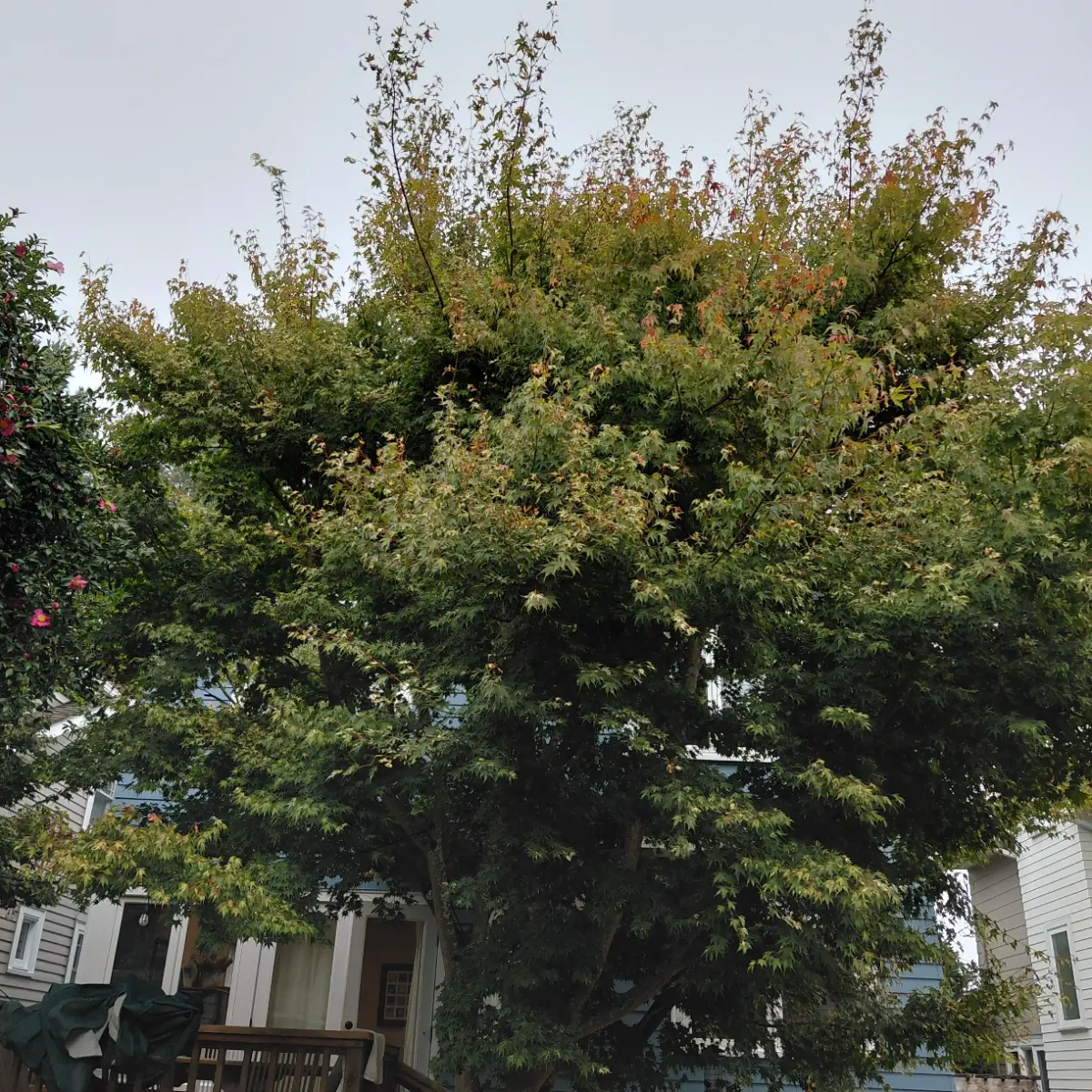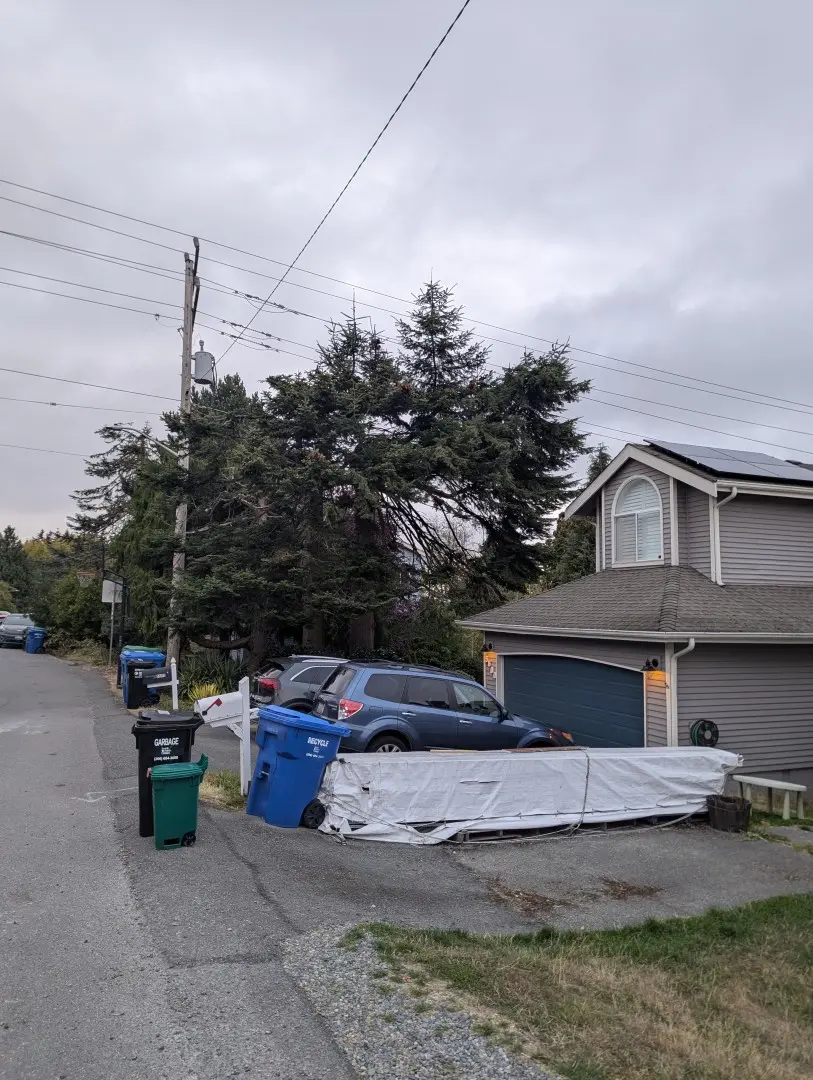

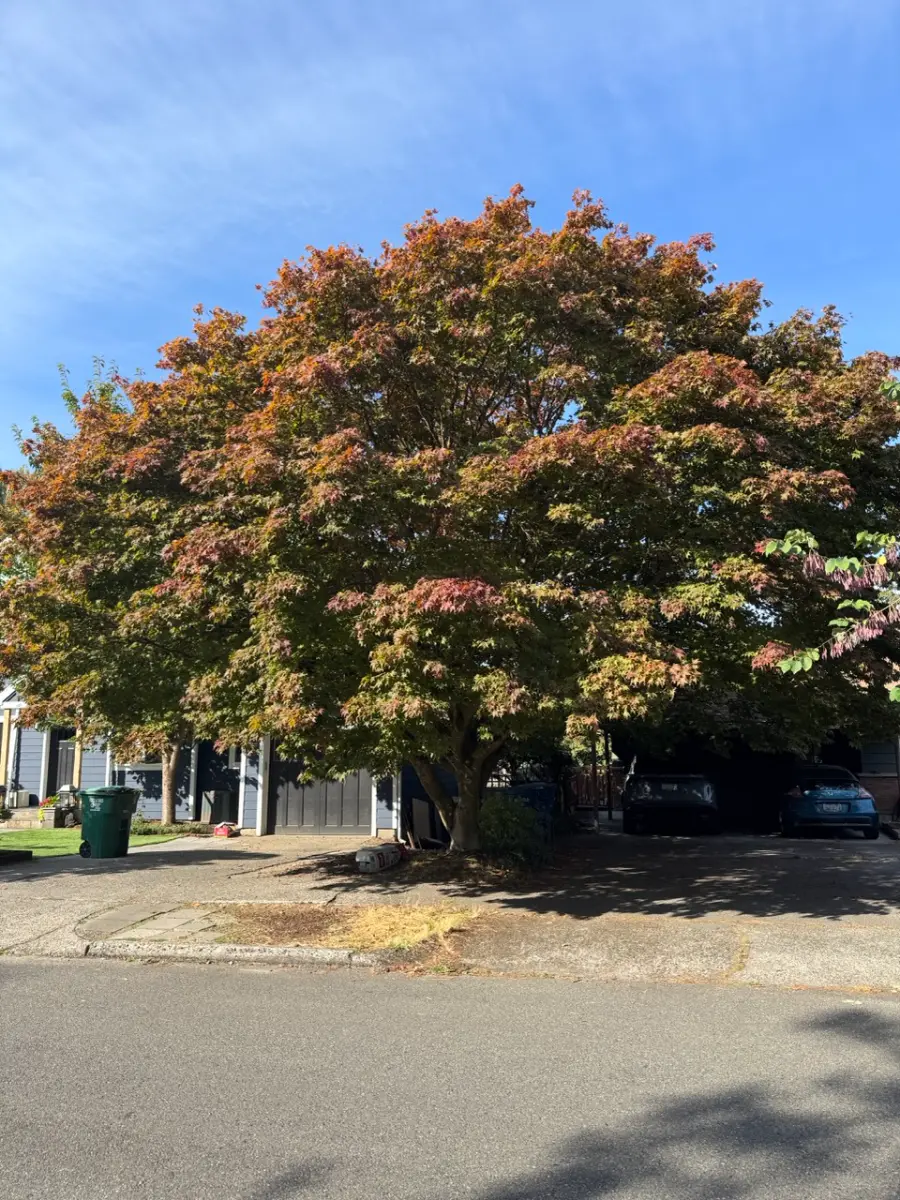
What is crown raising?
Crown raising, sometimes called crown lifting, is the removal of lower branches to create vertical clearance beneath a tree. It opens space for vehicles, pedestrians, buildings, sightlines and the lawn or garden underneath. The upper crown is left largely untouched, so the tree keeps most of its leaf area and shade.
Raising sounds simple, but the order and size of cuts matter. Removing too many low limbs at once shifts weight to the top of the tree and can leave large wounds on the trunk. A careful raise is done gradually, keeping at least two thirds of the tree’s height as living crown. It is one of the most requested types of tree pruning in Andover, MA, especially on streets where trees were planted close to driveways.
What clearance do you need?
Clearance depends on what’s underneath. These are common targets:
| Situation | Typical clearance |
|---|---|
| Lawn and garden beds | Enough to walk and mow comfortably, often 8 feet |
| Sidewalks and paths | About 8 feet over walking surfaces |
| Driveways | Roughly 13 to 14 feet for delivery trucks and plows |
| Roofs | A few feet of space between branches and shingles |
| Streets | Town standards for public ways; trees in the right of way fall under the tree warden |
Snow changes the picture in winter. A branch that clears the driveway in July can sag well down under wet snow, so a little extra height over drives and walks is wise in Andover.
How does crown raising help a tree and property?
- Access: cars, plows, delivery trucks and people pass without hitting limbs.
- Light and lawn health: sunlight reaches grass and gardens under the tree.
- Airflow: air moving through the lower canopy dries leaves faster, which reduces fungal leaf disease.
- Safety and security: clear sightlines at driveway ends and from windows.
- Structure: removing low limbs while they’re small avoids big trunk wounds later.
Raising also improves safety at night: clearer sightlines around entrances, paths and parked cars make a property easier to see and to light.
What are the signs you need crown raising?
- Branches scrape cars, trucks or the plow
- You duck under limbs on a path or sidewalk
- Grass under the tree is thin because it never gets sun
- Low limbs block the view from the driveway into the street
- Branches rest on a fence, shed or roof edge
- Limbs droop to the ground every time it snows
- Mowing under the tree means fighting branches
- A street sign or house number is hidden
Why do low limbs become a problem?
Trees naturally grow branches low on the trunk when they have room and light, and many yard trees were planted with no plan for clearance. As limbs lengthen they also droop, especially on species like pin oak, spruce and some maples. Snow and ice make the droop worse each winter. On newer lots in West Andover, woodland-edge trees exposed by clearing often throw long, low limbs toward the new open space.
Which Andover trees most often need raising?
Some species almost always end up on the crown raising list:
- Norway and silver maples: fast, spreading growth with long lower limbs that arch over driveways and lawns.
- Pin oak: lower branches naturally point downward, so they hang into walkways and parking spaces.
- White pine and spruce: lower limbs shade out and die back over time, leaving brittle dead branches low on the trunk.
- Crabapples and ornamental cherries: low, wide canopies over lawns and paths that need regular lifting to stay usable.
- Red oak and sugar maple: heavy lower limbs on open-grown yard trees that reach toward roofs and sheds.
Knowing the species helps plan the cuts. A pin oak needs gradual raising over a few seasons, while a white pine’s dead lower whorls can usually be removed cleanly at once. Our overview of common trees in Andover describes how each one grows.
How does snow change crown raising?
In Andover, clearance has to survive winter, not just summer. Wet snow can bend a horizontal limb down several feet, and plow trucks need extra height over the end of the driveway. Ice storms add even more weight, often overnight.
That’s why raising is usually planned with a margin over drives and walks, and why weak or long low limbs are sometimes shortened rather than removed. A shorter limb carries less snow, bends less and recovers its position after the storm. Planning this before the first snowfall avoids the common sight of broken lower limbs piled at the curb after a nor’easter.
Can crown raising be combined with other work?
Often it should be. When a tree is being raised, it’s the ideal moment to remove deadwood higher in the crown, thin crossing branches and check unions for weakness, all in one visit. On trees that both hang low and spread wide over the house, raising is frequently paired with a light crown reduction so the tree is balanced top to bottom.
Raising also helps the ground under the tree. Once lower limbs are gone, lawn and garden beds get more light, and mulch rings and soil improvements are easier to maintain. If the tree has been under stress, a plant health care visit can follow up on the soil and roots while access is easy. Combining jobs saves a second setup and keeps the tree’s care consistent.
How is crown raising done well?
The guiding rule is gradual change. Low branches on young trees are shortened first and removed in later years, which keeps the trunk tapering properly. On mature trees, only branches that truly block clearance come out, each cut just outside the branch collar.
Raise young trees in stagesOn a young tree, temporary low branches help the trunk thicken. Remove them over several years rather than all at once for a stronger tree.
Avoid raising so high that the tree looks like a lollipop. A crown concentrated at the very top catches more wind and puts more stress on the trunk. Keeping a healthy live crown ratio is part of what separates good tree trimming from simple limb removal.
What can you check yourself?
Stand in the driveway and on the sidewalk and note which limbs are in the way. Watch how branches hang after a heavy snow, or take photos. Small twigs you can reach from the ground with hand pruners are fine to trim. Anything thicker than your wrist, or reachable only from a ladder, should be left to a professional.
Heavy limbs spring backWhen a loaded branch is cut it can jump upward or swing sideways. Large lower limbs also tear bark down the trunk if cut in one pass. Proper three-cut technique and rigging prevent this.
What does a crown raising visit look like?
- Measure clearanceThe needed height over drives, paths and the house is agreed.
- Pick the limbsOnly branches that block clearance, or will soon, are marked for removal.
- Make proper cutsLarger limbs are removed in three cuts to prevent bark tearing.
- Check balanceThe crown is reviewed so the tree isn’t left top-heavy.
- Clean upBrush is chipped and the area is raked and blown clean.
What affects the cost of crown raising?
| Factor | Why it matters |
|---|---|
| Height of clearance | Higher clearance means more limbs and higher work. |
| Limb size | Large limbs need rigging and more cutting time. |
| Number of trees | Several trees along a drive are efficient in one visit. |
| Obstacles | Fences, gardens and wires slow the work. |
When is it urgent?
If a low branch has cracked and hangs over a walkway, or snow has bent a limb onto the roof or a wire, deal with it promptly and keep people out from underneath. Broken limbs over driveways are a common storm call, and our storm preparation guide covers what to do first.
Call to plan a crown raise that fits your trees and your space.
Where we raise crowns in Andover
Crown raising is common along the long driveways of South Andover, the tree-lined streets of Andover Center, and wooded subdivision lots across town.
Crown raising FAQs
How high can a tree be raised?
Keep at least two thirds of the tree’s height as living crown. Raising beyond that weakens the tree and makes it top-heavy.
Does crown raising harm the tree?
Not when cuts are proper and only necessary limbs are removed. Large trunk wounds from removing big low limbs are what to avoid.
What time of year is best?
The dormant season is ideal for most trees, and the only safe window for oaks. Hazardous limbs can be removed any time.
Can crown raising help my lawn?
Yes. More light and air under the tree helps grass grow, though very dense shade trees may still need shade-tolerant groundcover.
Is crown raising the same as crown reduction?
No. Raising removes low limbs for clearance. Crown reduction shortens the tree’s height or spread.
Who handles branches over the street?
Trees in the public right of way are the town’s responsibility. Contact the Andover tree warden about public shade trees.