
What is tree removal?
Tree removal is the controlled cutting down of a tree, usually in sections, followed by cleanup of the wood and brush and, if you want it, grinding of the stump. On open ground a tree can sometimes be felled in one piece, but most trees around Andover homes stand close to houses, fences, gardens and wires, so they’re dismantled from the top down and each piece is lowered by rope.
Removal is the last option, not the first. A good tree pruning company in Andover will tell you when pruning, cabling or treatment can keep a tree safely, and when removal truly is the right answer.
When does a tree need to be removed?
Removal is usually recommended when one or more of these is true:
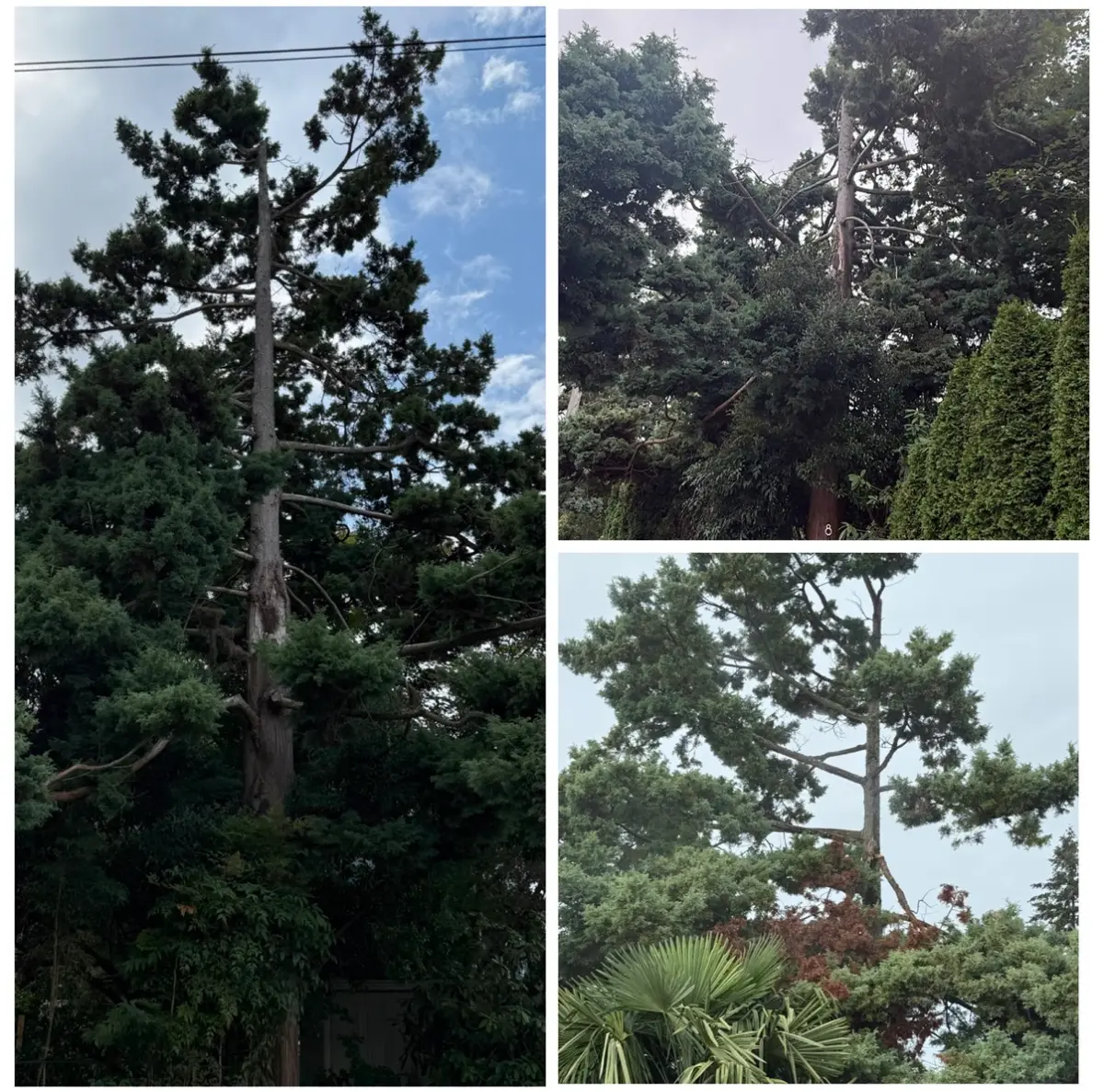
- The tree is dead or more than about half of the crown has died back
- The trunk has a major crack, split or cavity with significant decay
- The roots are failing: the tree is leaning more each year, or soil is heaving
- A disease or pest has made the tree unsafe, such as ash killed by emerald ash borer
- The tree has been badly damaged by a storm and can’t be restored
- It’s too close to the foundation, septic system or utilities and is causing damage
- It’s the wrong species in the wrong place, like an invasive Norway maple crowding a garden
- Space is needed for construction, and the tree can’t be protected
What are the warning signs of a dangerous tree?
- Mushrooms, conks or oozing at the base or on the trunk
- Cracks in the trunk or in a major fork
- A new or increasing lean, especially with lifted soil on the opposite side
- Large dead limbs or a dead top
- Hollow-sounding wood or visible cavities
- Bark falling off in large sections
- Thin, sparse leaves high in the crown for several years running
- Woodpecker activity concentrated on one tree, which often means insects under the bark
Any one of these is a reason for a closer look. Several together make removal much more likely.
What causes trees to fail in Andover?
Most failures come from a few causes. Decay fungi enter through old wounds and slowly hollow the trunk or roots. Invasive pests, especially emerald ash borer, kill trees that then dry out and turn brittle. Construction near a tree damages roots years before the crown shows it. And weather finishes off weakened trees: wet snow, ice and nor’easter winds on saturated soil. Our guide to common tree problems in Andover explains each cause in more detail.
Dead ash gets more dangerous every monthAsh killed by emerald ash borer becomes brittle quickly, which makes climbing and rigging riskier. If an ash is declining, decide early; see our emerald ash borer guide.
How is a tree removed safely?
Safe removal depends on planning the work before the first cut. The crew identifies everything the tree could hit, sets up drop zones and decides how each piece will come down.
- Sectional dismantling: a climber or lift works from the top, cutting the tree into manageable pieces.
- Rigging: larger sections are tied off and lowered with ropes and friction devices instead of dropped.
- Crane removal: for very large trees over houses, a crane can lift sections clear when access allows.
- Felling: where there’s enough open space, the trunk can be dropped in a planned direction.
- Ground protection: mats protect lawns and driveways from equipment.
Should you remove the tree or try to save it?
This is the question behind most removal calls, and the answer depends on three things: the tree’s structural condition, its health, and what it could hit. A healthy tree with one weak fork can usually be pruned and cabled. A tree with decay in the main trunk, a failing root system or a lethal pest usually can’t be made reliably safe.
| Situation | Usually save | Usually remove |
|---|---|---|
| Weak fork, sound wood | Cabling and reduction | |
| Dead limbs, healthy trunk | Pruning | |
| Over half the crown dead | Removal | |
| Decay in trunk or root flare | Removal, in most cases | |
| Ash with emerald ash borer, early stage | Treatment may work | Advanced decline |
| Beech leaf disease, early stage | Monitoring and care | Severe dieback |
If you’re unsure, a plant health care assessment can tell you whether treatment is realistic before you commit to removal.
What happens to the wood and debris?
Branches are run through a chipper, and the chips are hauled away or left for mulch if you want them. Larger wood can be cut to firewood length and stacked, left as logs for wildlife or garden edging, or removed entirely. Ash wood deserves care: emerald ash borer larvae can survive in cut logs, so ash firewood should stay local rather than be moved across the region.
Removal near homes also involves coordination you might not think about: moving cars from the driveway, alerting neighbors when wood will be lowered near a shared fence, and keeping kids and pets inside while work is underway.
Do you need a permit to remove a tree in Andover?
Usually not for a tree on your own private property, but there are important exceptions. Public shade trees along town roads are protected under Massachusetts law and fall under the town tree warden, and removing one involves a public process. If your street is a designated scenic road, tree work in the right of way may need approval. Work in or near wetlands and streams can fall under the Andover Conservation Commission. If you’re not sure where your property line or the right of way is, check before any tree near the street comes down.
What can you check before calling?
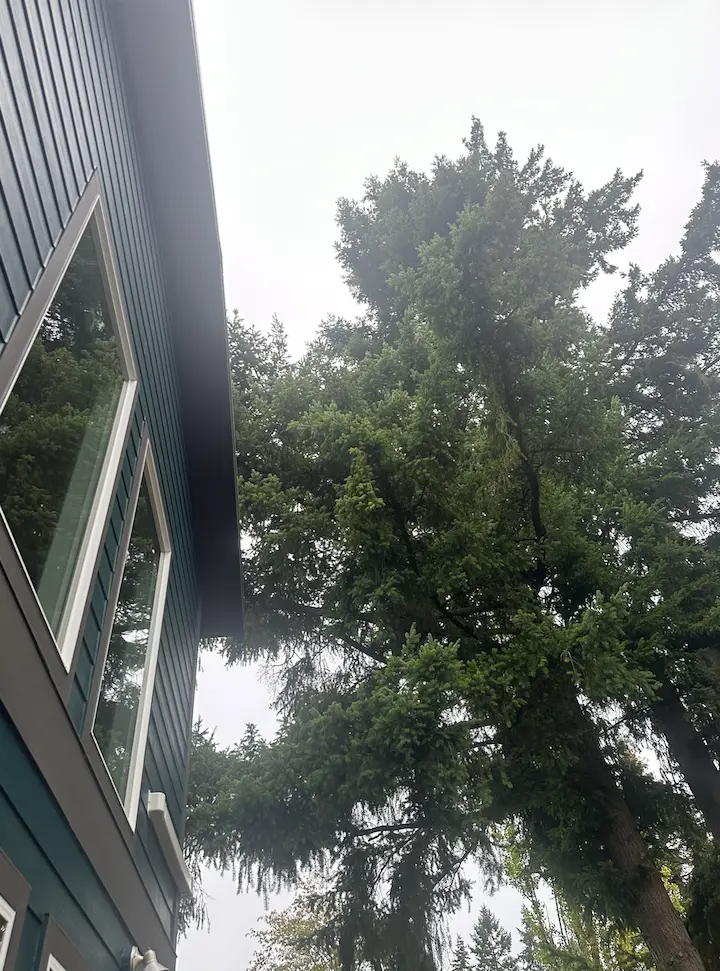
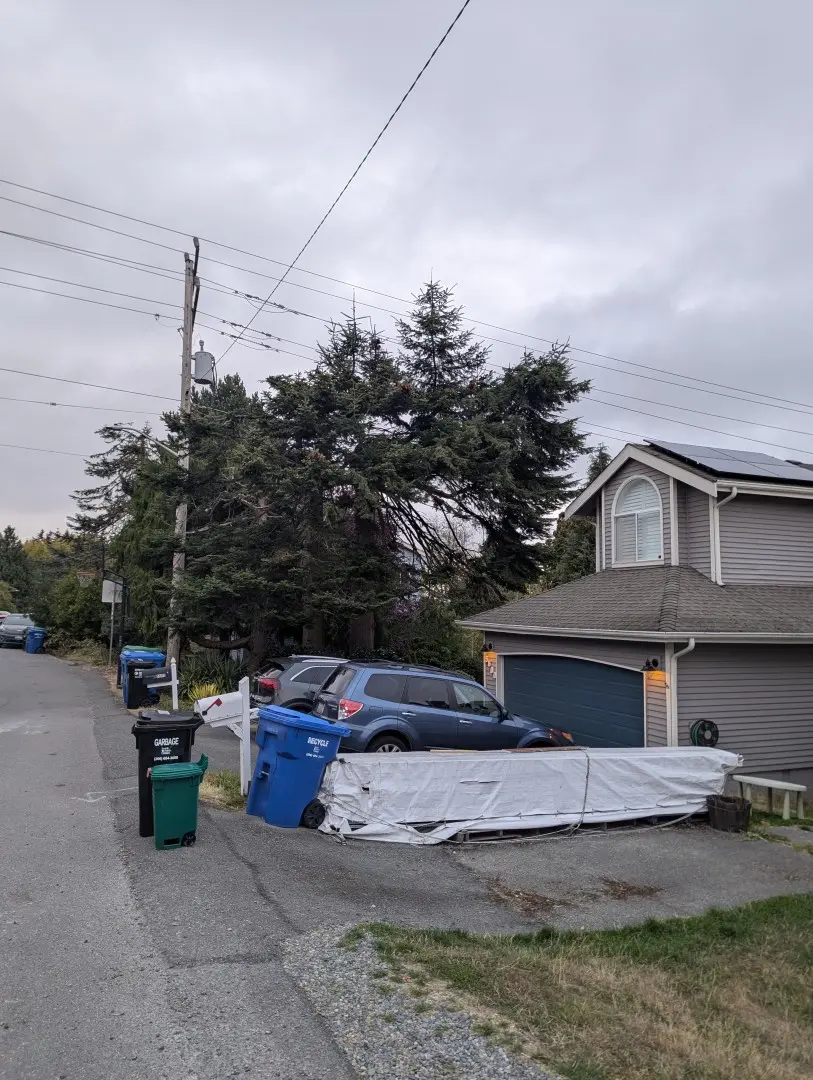
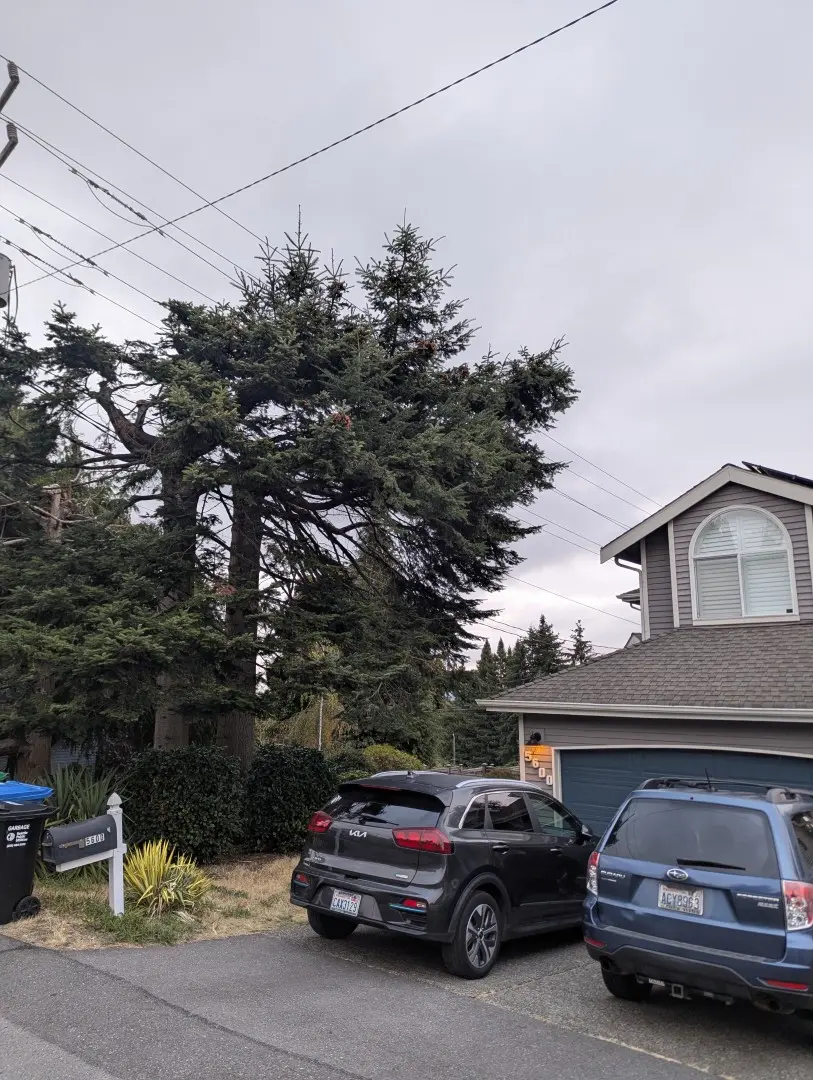
Walk around the tree and note cracks, fungi, lean and dead branches. Look at what the tree could hit if it fell: the house, garage, wires, a neighbor’s yard. Check whether there’s access for equipment, such as a gate wide enough for a chipper or a driveway close to the tree. Photos of the whole tree, the base and the area around it help a lot.
Never fell a tree near your house yourselfTrees rarely fall exactly where planned, especially if they’re leaning or decayed. Cutting near structures, wires or roads needs trained crews, rigging and insurance.
What happens on removal day?
- Site walkTargets, drop zones, access and equipment placement are confirmed with you.
- Protect the propertyGround mats go down, and fragile items are moved or covered.
- Dismantle the crownLimbs come off first, lowered by rope where needed.
- Take down the trunkThe trunk is removed in sections or felled into open space.
- Process the woodBrush is chipped; logs are hauled or cut to firewood length if you prefer.
- Clean upThe yard is raked and blown clean. The stump is ground now or later.
What affects tree removal cost?
| Factor | Why it matters |
|---|---|
| Tree size and diameter | Bigger trees mean more cutting, rigging and wood to handle. |
| Location and targets | Trees over homes or wires require slow, controlled lowering. |
| Condition | Dead, brittle or decayed trees need extra safety steps. |
| Access | No equipment access means more climbing and hand-carrying. |
| Cleanup and stump | Wood removal and stump grinding add to the total. |
When is removal an emergency?
A tree that has fallen on a house, car or driveway, a tree that has partially uprooted and is still moving, or a split trunk hanging over a building are emergencies. Get everyone out of the area, assume any wire is live and call the utility first, then call for help. Take photos for your insurer if you can do it safely.
Call now to get the situation assessed and the tree made safe.
Tree removal across Andover
We remove trees throughout town, from tight backyard jobs in Andover Center to storm-damaged woodland edges in West Andover. After removal, stump grinding clears the ground for a new tree or lawn.
Tree removal FAQs
How long does a tree removal take?
Most residential removals take a few hours to a full day, depending on size, access and how much wood needs to be lowered by rope.
Is the stump removed too?
Stump grinding is usually a separate step that can be done the same day or later. Grinding takes the stump below the surface so you can replant or reseed.
Can I keep the wood?
Yes. Logs can be left cut to firewood length or stacked. Note that ash wood from emerald ash borer areas should not be moved long distances.
Will removal damage my lawn?
Ground protection mats and careful equipment placement keep damage to a minimum. Some light raking or reseeding may be needed where wood was handled.
Should I replace the tree?
Usually, yes, but with the right species in the right spot. Our guide to the best trees to plant in Andover can help.
Is a leaning tree always dangerous?
Not always. Trees that have leaned for decades often have adapted roots. A new or increasing lean, especially with lifted soil, is the warning sign.