
What is professional hedge trimming?
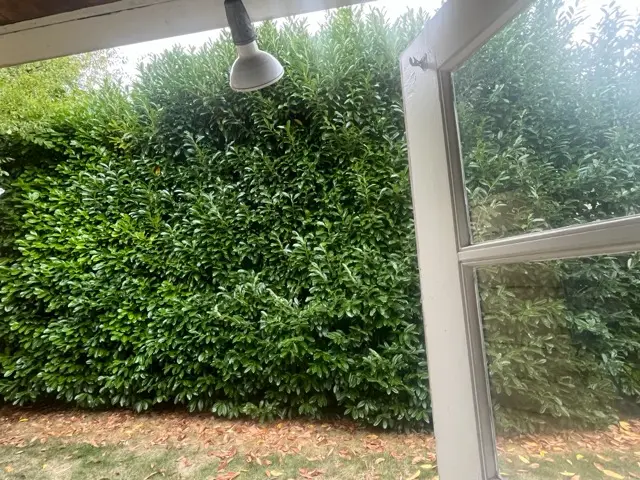
Hedge trimming is the regular shearing and shaping of shrubs planted in a row to form a screen, border or formal edge. Unlike tree pruning, which removes individual branches, hedge trimming cuts back new growth across the whole surface to keep the hedge dense and at a set size. Done well, it keeps foliage thick all the way to the ground. Done badly, it produces hedges that are green on top, bare at the bottom and brown inside.
Hedges are a natural companion to professional tree pruning in Andover, because so many properties here rely on arborvitae, yew and hemlock rows for privacy from neighbors and the street.
Which hedges are common in Andover?
| Hedge plant | Notes for Andover yards |
|---|---|
| Arborvitae | The most popular privacy screen. Doesn’t regrow from old, bare wood, so never cut into the brown interior. Prone to snow splaying. |
| Yew (Taxus) | Very tolerant of shearing and can regrow from older wood, making it ideal for formal hedges and renewal. |
| Boxwood | Classic low formal edging. Watch for boxwood blight and leaf miner. |
| Privet | Fast-growing deciduous hedge that needs trimming more than once a season. |
| Eastern hemlock | Makes a soft, dense hedge in shade. Check undersides of needles for hemlock woolly adelgid. |
| Burning bush | Common older planting; it’s an invasive species in Massachusetts, so many owners replace it. |
| Holly and inkberry | Broadleaf evergreens that take light shaping well. |
Why does hedge shape matter?
The single most important rule of hedge trimming is that the bottom should be slightly wider than the top. A hedge shaped like a gentle trapezoid lets sunlight reach the lower branches, so they stay leafy. Hedges trimmed wider at the top shade their own bases, and the lower growth thins out and dies.
Shape also matters in snow. Flat-topped, wide hedges collect heavy snow that splits and splays upright stems, a common problem with arborvitae. A narrower or slightly rounded top sheds snow better.
Narrow at the top, wide at the bottomAsk for a slight taper so the base gets light. It’s the difference between a hedge that’s green to the ground and one with bare legs.
Why do hedges need extra care in Andover?
Andover winters are hard on hedges. Heavy, wet snow piles onto flat tops and splays tall arborvitae open, sometimes permanently. Ice adds more weight overnight. Deer browse arborvitae and yew hard in late winter, leaving bare lower sections that take years to fill back in. Hedges along roads take salt spray from plows, which browns the street side while the yard side stays green.
Summer brings its own pressure. Dry spells stress shallow-rooted hedges planted in lawn, and dense hedges trimmed with no airflow inside can trap moisture and invite fungal problems. Hemlock hedges, common in shaded yards, face hemlock woolly adelgid, which has spread through much of Massachusetts.
Good trimming addresses all of this. A tapered profile and a top that sheds snow reduce splaying. Annual thinning of the interior improves airflow. And regular visits mean someone with trained eyes looks at the hedge every season, so problems like adelgid, bagworms or winter burn are spotted before whole sections are lost. If a hedge is mixed in with mature trees, the same visit can cover crown raising to give the hedge more light.
What are the signs your hedge needs attention?
- It has grown into the walkway, driveway or a neighbor’s yard
- The base is thin or bare while the top is thick
- The inside is brown and full of dead growth
- Stems have splayed open after snow
- The hedge is taller than you can maintain safely
- Sections have died or browned out
- Needles or leaves show white flecks, spots or webbing
- The hedge is blocking sightlines at the end of the driveway
When should hedges be trimmed in Massachusetts?
Most evergreen hedges, like yew, arborvitae and boxwood, are trimmed in late spring to early summer after the first flush of new growth hardens, with an optional light touch-up in mid-summer. Avoid heavy trimming in late summer and fall, because tender new growth won’t harden before winter and can be damaged by cold. Flowering hedges should be trimmed just after they bloom so next year’s buds aren’t removed. Our pruning calendar covers timing by plant type.
Can an overgrown hedge be saved?
Often. Yews, privet and many deciduous hedges can be rejuvenated by cutting back hard over two or three years, one side or one section at a time, which lets new growth fill in from older wood. Arborvitae and most junipers can’t be rejuvenated this way: they don’t regrow from bare interior wood. For overgrown arborvitae, the choice is usually a gentle reshaping within the green growth, or replacement.
How long does a new hedge take to fill in?
Most evergreen hedges take three to five growing seasons to form a solid screen, depending on species, spacing and light. Light, frequent shaping from the start, rather than letting plants grow tall and then cutting hard, produces a denser hedge sooner. Watering through the first two summers matters more than anything else for new plantings.
What causes hedges to decline?
- Shearing too wide at the top, shading out the base
- Cutting arborvitae or juniper back into bare, brown wood
- Snow and ice splaying upright stems
- Deer browsing, which is common on arborvitae and yew in winter
- Pests such as hemlock woolly adelgid, bagworms and boxwood leaf miner
- Diseases like boxwood blight, plus root problems from poor drainage
- Road salt spray along street-side hedges
If browning is spreading, it may be a health problem rather than a trimming problem. Our plant health care program diagnoses pests and soil issues before more of the hedge is lost.
Should hedges be trimmed by hand or machine?
Formal hedges like boxwood and yew are usually sheared with powered hedge trimmers for an even surface, then finished by hand where the shape needs detail. Informal and flowering hedges look better and stay healthier when they’re selectively thinned with hand pruners, removing older stems at the base so new growth fills in. Many properties have both styles, and a good visit uses the right tool for each so a natural screen isn’t turned into a stiff box by mistake.
What can you safely do yourself?
Light trimming of low hedges with hand or electric shears is a reasonable homeowner job. Keep blades sharp, trim when foliage is dry, and step back often to check the taper. After heavy snow, gently brush snow off hedges with a broom, sweeping upward rather than shaking hard.
Tall hedges and ladders don’t mixMost hedge-trimming injuries come from ladders and powered trimmers held overhead. Hedges taller than you can reach from the ground are safer left to a crew with the right equipment.
How does a hedge trimming visit work?
- Check the plantsSpecies, health, pests and any dead sections are noted first.
- Agree size and shapeHeight, width and the profile you want, including the taper.
- Trim the facesSides are trimmed first, keeping the base slightly wider than the top.
- Shape the topThe top is cut level or gently rounded to shed snow.
- Clean outClippings caught inside the hedge are removed so they don’t trap moisture.
- Haul awayClippings are raked, bagged or chipped and removed.
What affects the cost of hedge trimming?
| Factor | Why it matters |
|---|---|
| Length and height | Longer, taller hedges take more time and equipment. |
| Species | Fast growers and dense hedges take longer to shape. |
| Condition | Overgrown or renewal work takes far longer than maintenance. |
| Access | Hedges along slopes, fences or water are slower to reach. |
| Cleanup volume | Large amounts of clippings take time to haul. |
When is it urgent?
Hedge work is rarely urgent, but snow-splayed arborvitae should be tied or braced soon after a storm before stems set in their new position. Hedges blocking driveway sightlines onto busy roads are a safety issue worth fixing quickly.
Call to get them reshaped and back on a regular trimming schedule.
Hedge trimming around Andover
Privacy hedges are everywhere in town, from the closely spaced lots of Shawsheen Village to street-side screens in Andover Center and long boundary rows in West Andover.
Hedge trimming FAQs
How often should hedges be trimmed?
Most evergreen hedges need one main trim a year, in late spring or early summer, plus an optional light mid-summer shaping. Privet and fast growers need more.
Can you make my hedge shorter?
Usually, within limits. Yews tolerate hard height reductions; arborvitae can be reduced only if green growth remains below the cut.
Why is my arborvitae brown inside?
Some interior browning is normal as older foliage sheds. Widespread browning can mean drought, winter burn, pests or root issues.
Should I trim hedges in the fall?
Avoid heavy trimming in late summer and fall. Fresh growth won’t harden before winter and may be damaged.
Do you remove dead hedge plants?
Yes. Dead sections can be removed, and the space prepared for replacement plants.
Is hedge trimming different from tree pruning?
Yes. Hedges are sheared to a surface; trees are pruned branch by branch. See tree trimming for trees.