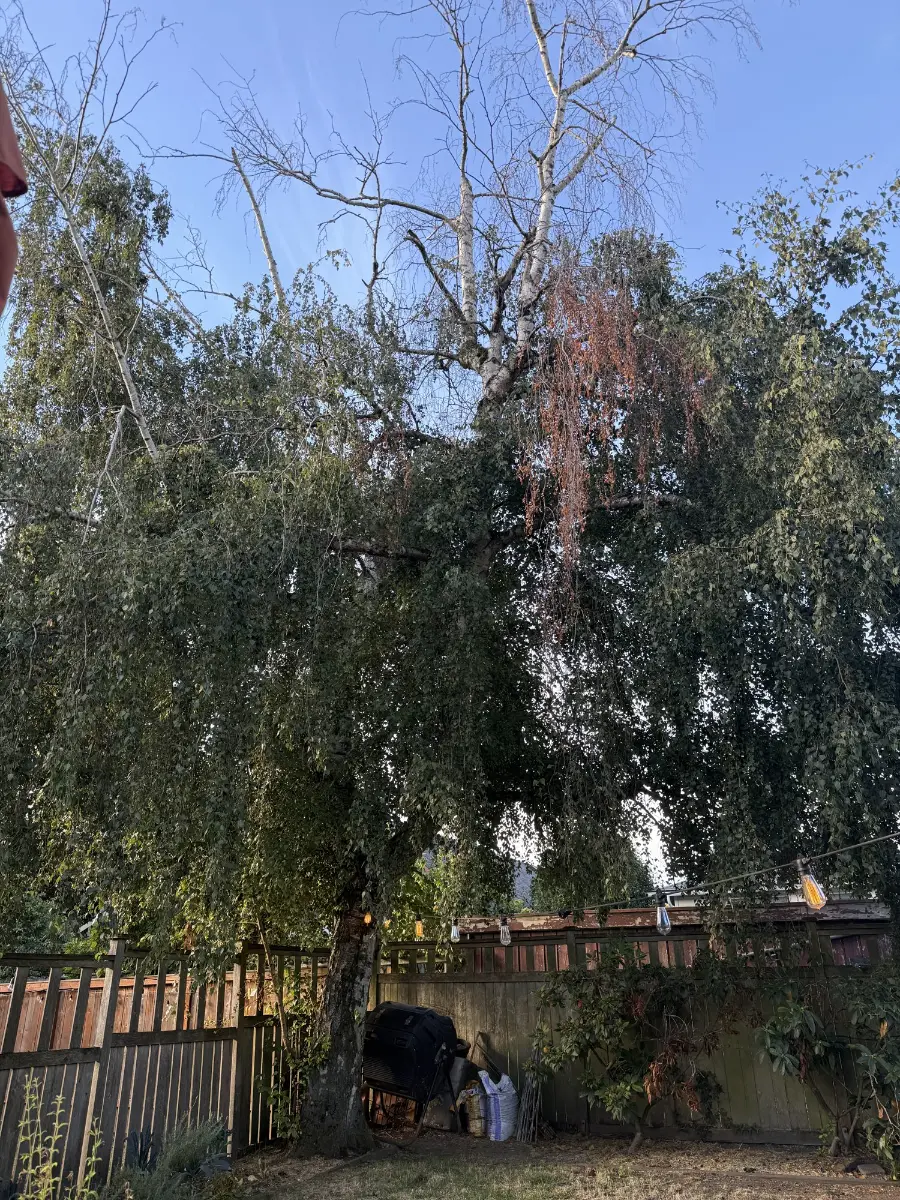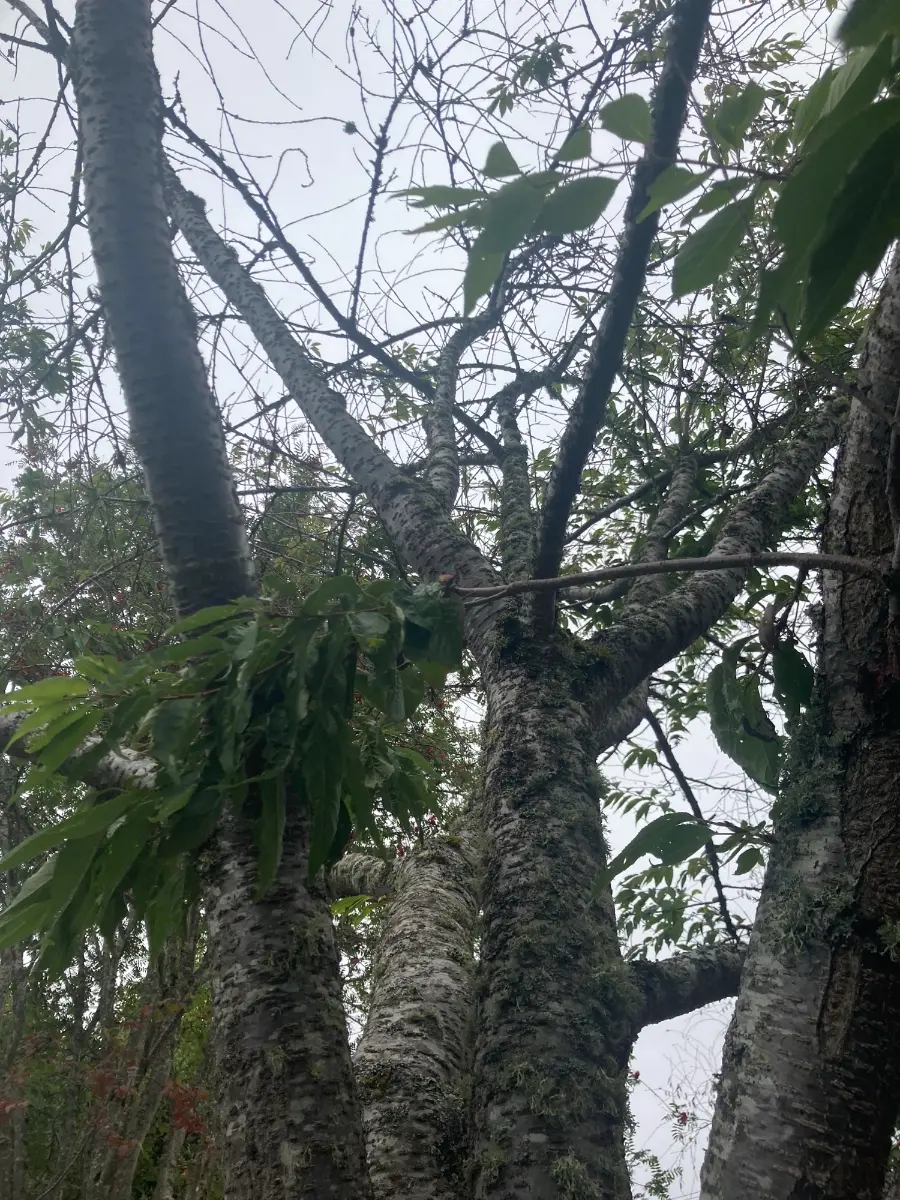

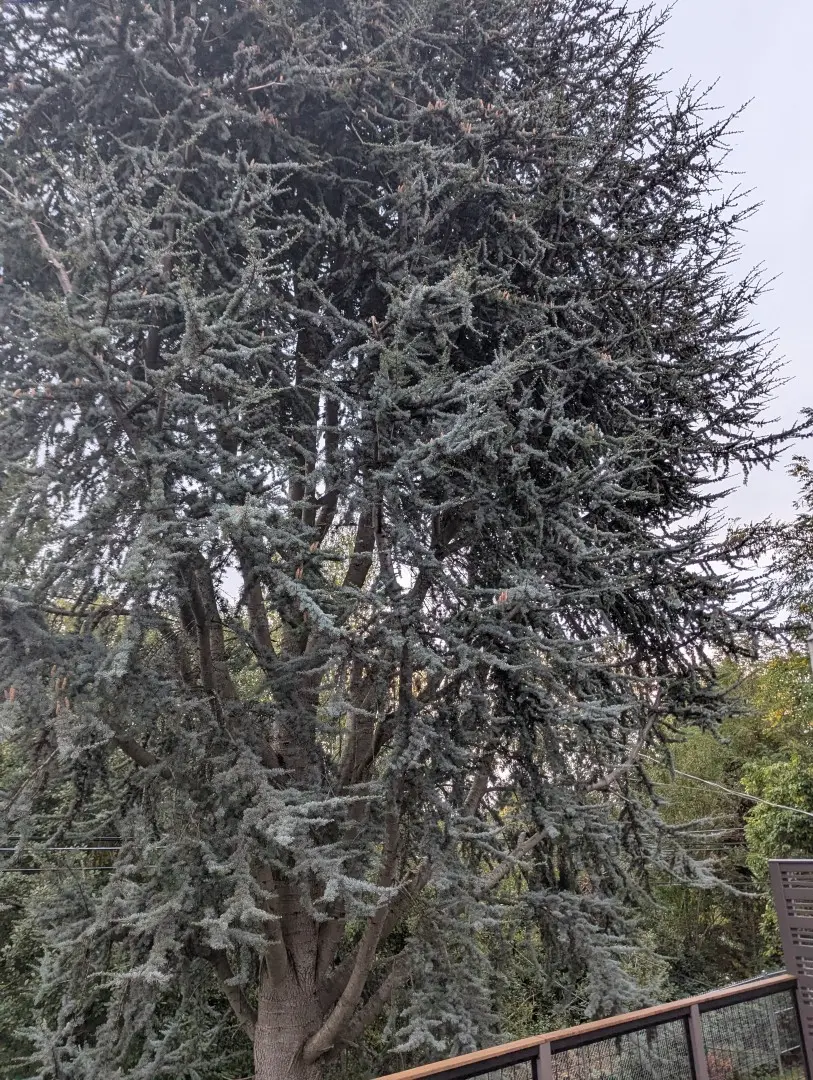
What is tree disease management?
Tree disease management is the process of identifying what is making a tree sick, judging how serious it is, and choosing the right response: cultural care, targeted treatment, sanitation pruning, or removal when a tree is beyond saving. Many problems that look alike from the ground, such as browning leaves or thinning crowns, have very different causes and fixes. Treating the wrong thing wastes money and can let the real problem spread.
Disease work is closely tied to plant health care, because healthy, unstressed trees resist infection far better. As an Andover, MA tree pruning company focused on long-term care, we treat diagnosis as the most important step.
Which tree diseases affect Andover trees?
These six diseases cause most of the concern in Andover and across Essex County.
Beech leaf disease
Beech leaf disease (BLD) is caused by a microscopic nematode, Litylenchus crenatae subsp. mccannii, that feeds inside leaf buds. Infected American and European beeches show dark green bands between leaf veins, followed by puckered, leathery and curled leaves, early leaf drop and a thinning crown. Young beeches can die within a few years, and mature trees decline steadily. BLD has been confirmed in Massachusetts. Management focuses on early detection, keeping trees vigorous, and emerging treatments applied under professional guidance. Our beech leaf disease guide covers it in depth.
Anthracnose
Anthracnose is a group of fungal diseases that thrive in cool, wet springs. On maples, oaks, dogwoods and sycamores, it causes irregular brown or tan blotches along leaf veins, curled leaves and early leaf drop. Most years it is cosmetic and trees refoliate, but repeated infections weaken trees, and dogwood anthracnose can kill branches. Raking and removing fallen leaves, thinning crowns for airflow and pruning out dead twigs help.
Apple scab
Apple scab affects crabapples and apples. It shows up as olive-green to black velvety spots on leaves and fruit, followed by yellowing and heavy leaf drop by midsummer. It rarely kills trees, but years of defoliation weaken them. Resistant crabapple varieties, sanitation and well-timed spring protective sprays manage it.
Fire blight
Fire blight is a bacterial disease of pears, apples, crabapples and related plants. Blossoms and shoot tips turn black and bend into a "shepherd’s crook," as if scorched by fire, and cankers may ooze in spring. Infected branches are pruned out well below visible damage during dry weather, and tools are disinfected between cuts so the bacteria aren’t spread.
Oak wilt
Oak wilt is a serious vascular disease caused by a fungus that blocks water flow in oaks. Red oaks can wilt and die within a single season, often dropping leaves that are still partly green in summer. It spreads through root grafts between nearby oaks and by sap beetles that visit fresh wounds. Massachusetts treats oak wilt as a major threat. The most important prevention is simple: prune oaks only during the dormant season. Our oak wilt guide explains the signs and what to do.
Dutch elm disease
Dutch elm disease is a fungal infection spread by elm bark beetles and through root grafts. Leaves on one or more branches wilt, yellow and brown in early summer, and brown streaking appears under the bark of infected twigs. Infected branches must be removed promptly and dead elms taken down, because they breed the beetles. Valuable surviving American elms can be protected with preventive fungicide injections.
How can you tell what’s wrong with your tree?
| What you see | Possible causes |
|---|---|
| Dark bands between leaf veins on beech | Beech leaf disease |
| Brown blotches along veins after a wet spring | Anthracnose |
| Velvety black spots, early leaf drop on crabapple | Apple scab |
| Blackened, hooked shoot tips on pear or apple | Fire blight |
| Rapid summer wilting and leaf drop on oak | Oak wilt (report and confirm) |
| Wilting, yellowing elm branches with streaked wood | Dutch elm disease |
| Browning needles on white pine in early summer | Needle cast fungi |
What are the warning signs of tree disease?
- Leaf spots, blotches or bands that spread through the canopy
- Leaves wilting while soil moisture is normal
- Early leaf drop in early or mid summer
- Dieback starting at branch tips
- Cankers, sunken bark or oozing on branches and trunk
- Streaking or discoloration in the wood under the bark
- Mushrooms or conks on the trunk or roots
- Several trees of the same species declining at once
What about white pine needle damage?
White pines in Andover often show yellow-brown needles in early summer, followed by heavy needle drop. This is usually needle cast, a fungal complex favored by wet springs that has become common across New England. It looks alarming, but trees usually push new growth each year. Repeated seasons weaken trees, so improving airflow, avoiding planting pines too close together and supporting tree health help. Severe or worsening cases are worth a closer look, because borers and root problems can produce similar symptoms.
Is it a disease, a pest or something else?
Many "disease" calls turn out to be something else. Scorched leaf edges in August often point to drought or root damage, not infection. Sudden decline after a new patio or driveway usually traces back to cut or compacted roots. Thinning ash crowns with woodpecker damage are almost always emerald ash borer. That’s why diagnosis looks at the whole tree and its surroundings, not just a single leaf.
What causes outbreaks?
Weather is the biggest trigger. Wet, cool springs favor fungal leaf diseases like anthracnose and apple scab. Insects carry vascular diseases: bark beetles for Dutch elm disease, sap beetles for oak wilt. Stress from drought, compacted soil and root damage makes trees more vulnerable. And wounds from pruning at the wrong time, mower strikes or storm breaks give pathogens a way in.
Timing is the cheapest treatmentPruning oaks in winter, removing infected fire blight shoots in dry weather and raking fallen scab-infected leaves in fall cost little and prevent a lot.
What can you check yourself?
Take clear photos of affected leaves (top and underside), the whole tree and the trunk base. Note when symptoms started and how fast they’re spreading. Check whether other trees of the same species nearby show the same signs. Don’t prune suspected oak wilt or Dutch elm disease trees yourself, because fresh wounds and moved wood can spread the problem.
Don’t move firewoodMoving wood from diseased or infested trees spreads pests and pathogens to new areas. Keep firewood local and ask how to dispose of diseased wood properly.
How does disease diagnosis and treatment work?
- On-site inspectionSymptoms, pattern of spread and the tree’s overall health are examined.
- Confirm the causeSamples may be collected for lab diagnosis when symptoms are ambiguous.
- Assess the riskHow serious the disease is for this species, and whether it threatens nearby trees.
- Choose the responseCultural care, sanitation pruning, targeted treatment or removal.
- Treat on timingApplications are timed to the disease cycle, often in spring.
- Follow upResults are checked, and the plan is adjusted for next season.
What affects the cost of disease management?
| Factor | Why it matters |
|---|---|
| Diagnosis method | Lab testing adds time and cost but avoids wrong treatment. |
| Treatment type | Injections, soil treatments and sprays differ in materials and labor. |
| Number of trees | Treating several trees at once is more efficient. |
| Sanitation pruning or removal | Removing infected wood adds work. |
When is tree disease an emergency?
Sudden summer wilting of oaks or elms, rapid crown collapse, or large dead limbs over a house need a quick response, both for safety and to limit spread to neighboring trees. If a diseased tree has become structurally unsafe, tree removal may be the right step.
Call to describe the symptoms and get your tree properly diagnosed.
Disease management across Andover
Beech leaf disease monitoring is a priority for older properties around the Phillips Academy and Bancroft area, and oak wilt prevention matters most on the oak-heavy lots of South Andover. Crabapples and ornamental pears in Andover Center gardens often need help with apple scab and fire blight.
Tree disease FAQs
Can beech leaf disease be cured?
There is no proven cure yet, but early detection, good care and some emerging treatments can slow decline. Research is ongoing.
Is anthracnose dangerous to my maple?
Usually not. Most trees grow new leaves after an attack. Repeated years of heavy infection can weaken them, so improve airflow and sanitation.
How do I know if my oak has oak wilt?
Rapid wilting and leaf drop in summer, especially on red oaks, is the warning sign. Have it confirmed by a professional and avoid pruning it.
Can a tree with Dutch elm disease be saved?
If caught very early, removing infected branches can sometimes help. Preventive injections protect healthy elms.
Should I spray my crabapple for apple scab?
Protective sprays work only if timed from bud break through wet spring weather. Planting resistant varieties is the long-term fix.
Do diseased trees always need to be removed?
No. Many diseases are managed with care and treatment. Removal is for trees that are dying, unsafe or spreading a serious disease.