

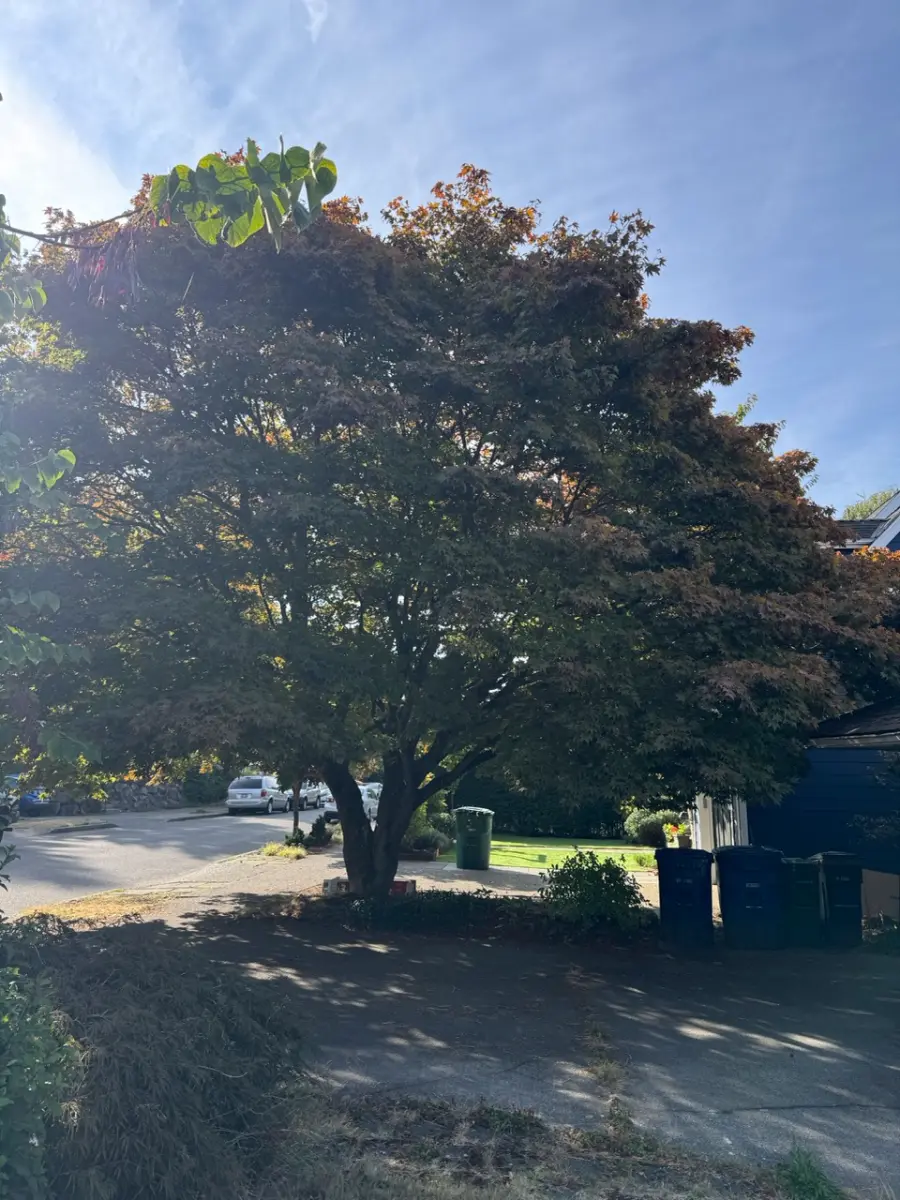
What makes Shawsheen Village trees special?
Shawsheen Village was developed in the early twentieth century by the American Woolen Company as a planned community near its mills on the Shawsheen River. The result is one of Andover’s most distinctive neighborhoods: consistent architecture, homes set close together, and streets lined with trees planted around the same time. A century later, many of those trees are at full size, and their crowns span roofs, driveways and the street.
That age and density are what shape tree care here. Big, old shade trees close to closely spaced homes need careful pruning, regular inspection and sometimes structural support. And because the trees are part of what makes the village feel the way it does, owners usually want to keep them. Our Andover tree pruning and care approach in Shawsheen focuses on keeping mature trees safe for as long as possible.
Which tree services do Shawsheen Village homes need most?
Crown reduction for trees that outgrew their lots
Shade trees planted a century ago often extend far over neighboring roofs. A measured crown reduction brings the spread back into scale by cutting to strong lateral branches, without topping and without losing the canopy.
Cabling and bracing for old unions
Many older maples and lindens have co-dominant stems with included bark, the classic weak fork. Tree cabling and bracing shares the load between stems so they don’t split under snow or ice.
Regular pruning and deadwood removal
Mature crowns produce deadwood every year. Routine tree trimming removes it before it falls on roofs, cars or the sidewalk, and keeps limbs clear of chimneys and gutters.
Plant health care for aging trees
Old trees in disturbed, compacted soils benefit from root zone care, soil testing and monitoring for pests. Our plant health care program helps them stay vigorous longer.
Careful removal when a tree reaches the end
When an old tree is no longer safe, removal on a tight village lot means rigging and lowering every piece. Planning the replacement at the same time keeps the streetscape intact.
What tree problems are common in Shawsheen Village?
- Trees larger than their space: crowns overhanging roofs and neighboring homes
- Weak forks: co-dominant stems and included bark in mature maples and lindens
- Root conflicts: roots lifting sidewalks and driveways in small front yards
- Decay in old wounds: cavities from decades-old storm breaks and past pruning
- Salt and compaction: stress for trees close to the street and parking
- Disease in ornamentals: apple scab on crabapples and anthracnose on maples after wet springs
Coordinate with neighborsOn closely spaced lots, one tree often affects two or three properties. Agreeing on work with neighbors makes access easier and avoids disputes.
Caring for the neighborhood canopy
The village’s character depends on its trees as much as its buildings. Removing a single large tree changes the light, temperature and look of a street. That’s why the first question should usually be whether a tree can be kept safely, through reduction, cabling and health care, before deciding on removal. When removal is unavoidable, replanting with a species suited to small lots keeps the canopy going for the next century. Our guide to Andover’s common trees describes how the main species age.
A checklist for Shawsheen Village homeowners
- Check for limbs touching the roof, gutters or chimney.
- Look at major forks for cracks, seams or old cable hardware.
- Note any deadwood over the driveway or sidewalk.
- Watch maple and linden crowns for thinning or early color.
- Keep mulch pulled back from trunks and avoid piling soil over roots.
Storm preparation for big old trees
Old trees close to homes are where storm damage hurts most. Before winter, deadwood removal, end-weight reduction on long limbs and a check of any existing cables make a real difference. Our guide on preparing trees for nor’easters covers what to do before and after a storm.
Call to talk about keeping it safe with reduction, cabling or health care.
Which trees define Shawsheen Village streets?
The village’s older plantings include sugar and Norway maples, red oaks, lindens and some surviving elms, along with ornamental crabapples and dogwoods in front gardens. Norway maples, common in older plantings across New England, cast dense shade and form heavy crowns that need regular attention; they’re now considered invasive in Massachusetts, so replacements are usually native species. Lindens and red oaks age gracefully with good pruning, and any remaining elm is worth protecting from Dutch elm disease. Our tree disease management page covers elm protection.
What should you expect from work on a village lot?
Because homes sit close together, tree work here is planned around neighbors and the street. Parking for the truck and chipper, access through a shared driveway, and how long the sidewalk needs to be coned off are all agreed in advance. Wood is lowered in small pieces by rope, and nothing is dropped near roofs, windows or parked cars.
Nearby neighborhoods
Shawsheen Village is a short walk from Andover Center and the streets around the Phillips Academy area, and it shares the Shawsheen River with the historic village of Ballardvale to the south.
Shawsheen Village tree service FAQs
Can a century-old tree be kept safely?
Often, yes. Regular inspection, crown reduction, cabling and health care can keep old trees safe for many more years if the trunk and roots are sound.
My tree hangs over my neighbor’s roof. What should I do?
A crown reduction on that side, agreed with your neighbor, usually solves it without removing the tree.
How often should old shade trees be inspected?
Every year or two, and after major storms. Older trees change faster as decay and weak unions develop.
Is old cabling hardware still safe?
It should be inspected. Old cables can loosen, corrode or become embedded and may need adjustment or replacement.
What should I plant if a big tree is removed?
Choose a species suited to the space, with a mature size that fits the lot. Planting slightly away from the old stump gives roots fresh soil.