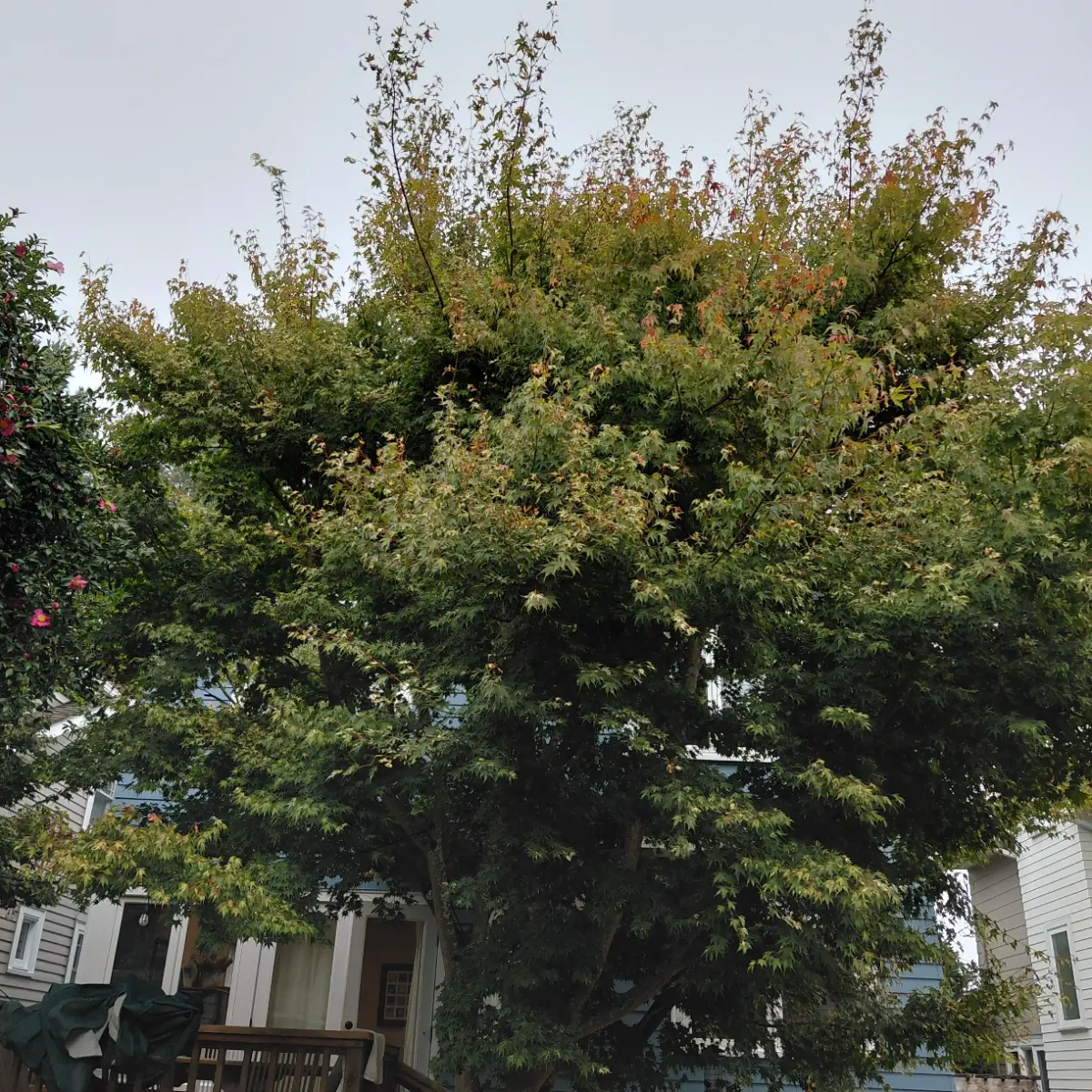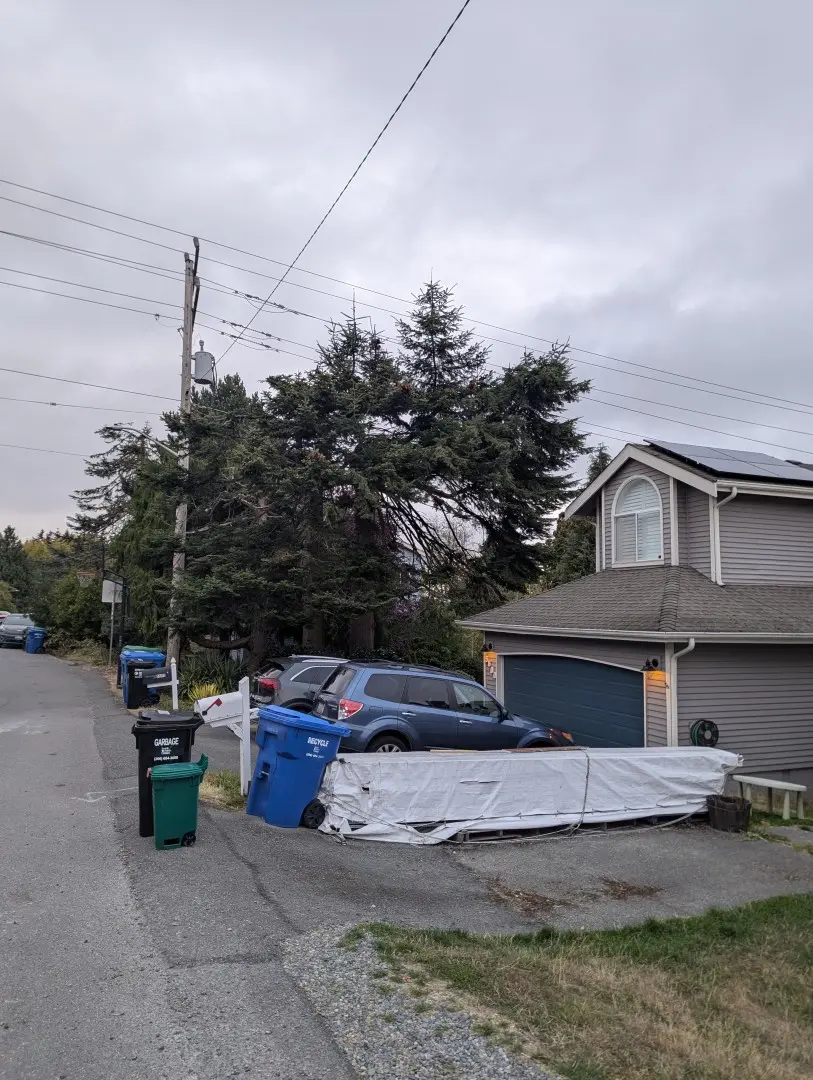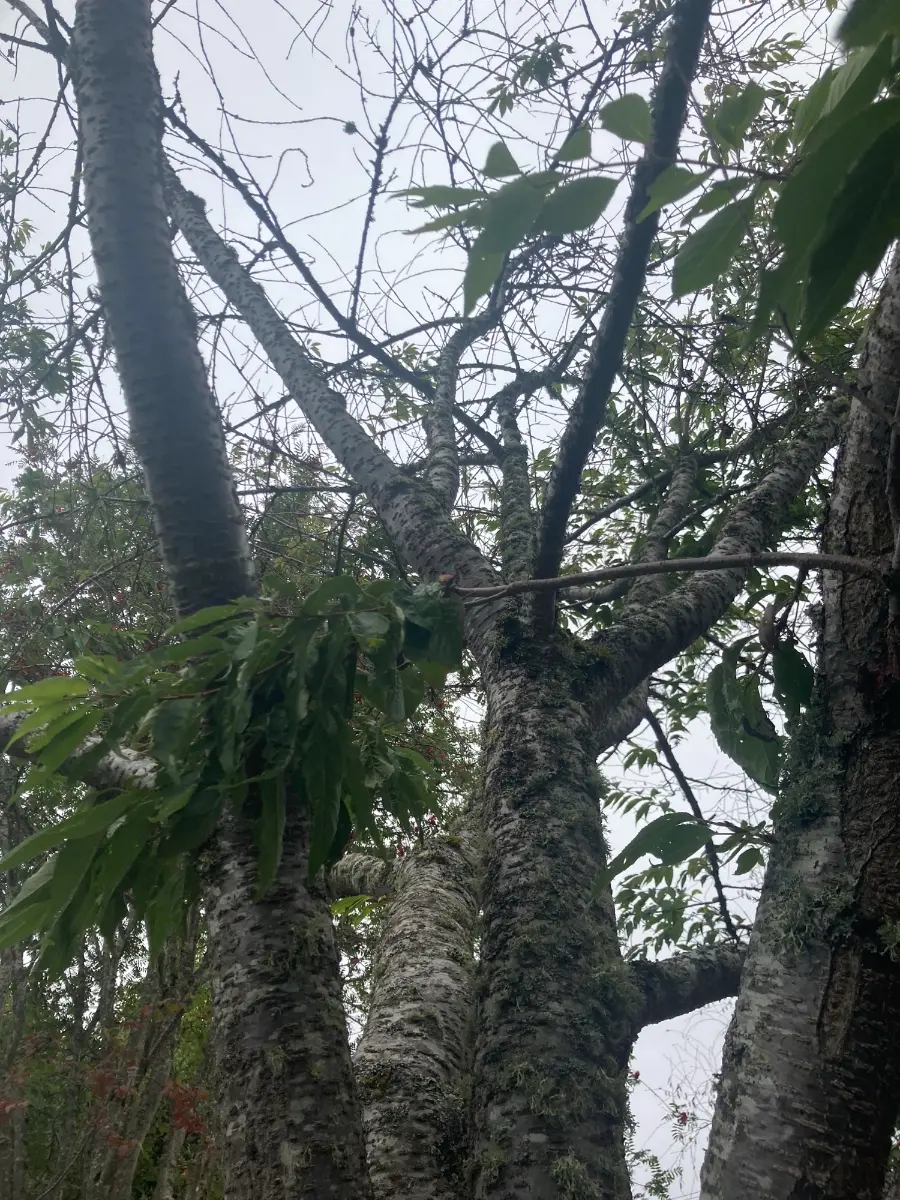

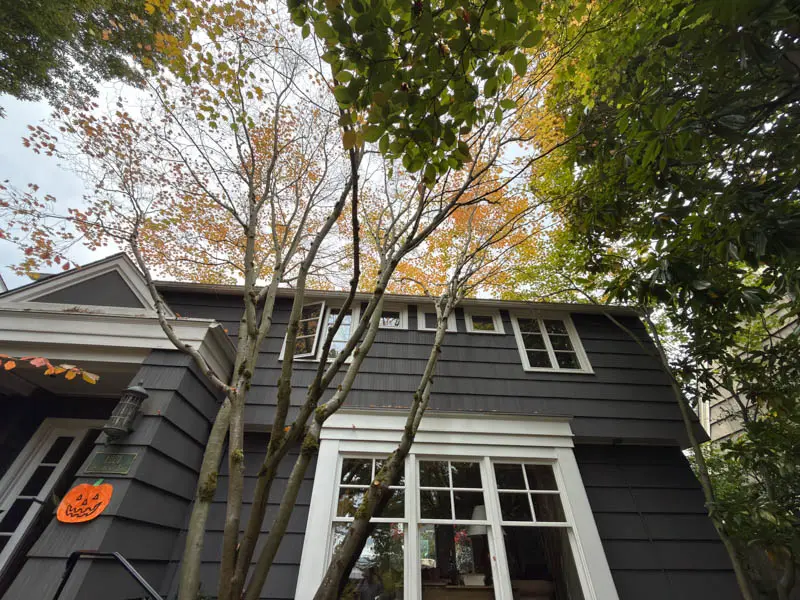
What is tree trimming?
Tree trimming means cutting growth back for clearance, safety and appearance: limbs off the roof, branches away from the driveway and deadwood out of the crown. It overlaps with pruning, the selective removal of branches for structure and health, and most visits combine both: dead and broken wood comes out, limbs are shortened away from the house, and a few well-chosen cuts improve how the tree will grow over the next decade.
Done properly, pruning removes only what the tree can afford to lose. Each cut is made just outside the branch collar, the slightly swollen ring where a branch meets the trunk, so the tree can seal the wound. Good pruning follows the ANSI A300 standard used across the industry, and it never involves topping.
Trimming goes hand in hand with tree pruning in Andover, and together they are the most common work we do, because so many yards here are shaded by mature maples, oaks and pines planted decades ago.
What does tree trimming include?
Most jobs use one or more of these techniques, matched to what the tree needs:
- Cleaning: removing dead, dying, diseased and broken branches. This is the safety baseline for any mature tree over a living area.
- Thinning: selectively removing smaller branches throughout the crown so wind and light pass through and weight is spread more evenly.
- Raising: removing lower limbs to clear roofs, driveways and walkways. It’s covered in detail on our crown raising page.
- Reduction: shortening long limbs back to strong lateral branches to cut height, spread or end weight. See crown reduction.
- Structural pruning: shaping young trees around one strong central leader so they avoid weak forks later.
A good plan uses the lightest technique that solves the problem. Removing more than about a quarter of a mature tree’s living crown in one season stresses it, so big corrections are often spread over several years.
What are the benefits of regular trimming?
Regular pruning pays off in four ways that are easy to see over time:
- Safety: removing dead and weakly attached limbs before they fail protects people, cars and roofs. Deadwood is brittle and drops without warning, often on a calm day.
- Storm resistance: a thinned, balanced crown lets wind pass through and spreads snow load evenly, so fewer branches snap during a nor’easter.
- Tree health: taking out diseased, crossing and rubbing branches removes entry points for decay and lets air dry the canopy, which reduces fungal leaf diseases like anthracnose.
- Property care: keeping limbs a few feet off the roof protects shingles and gutters, reduces moss and leaf buildup, and keeps critters from using branches as a bridge to the attic.
There’s a cost argument too. Trees pruned on a steady cycle need lighter, quicker visits. Trees left for fifteen years often need heavy corrective work or cabling, and sometimes removal, because a small problem grew into a structural one.
How should young trees be pruned?
The cheapest pruning a tree will ever get is in its first ten years. Young trees are trained around one dominant central leader, with branches spaced along the trunk instead of clustered at one point. Competing leaders are shortened early, while the cuts are still small, so they never grow into the tight, bark-filled forks that split under snow decades later.
Structural pruning on young trees is light work, usually every two to three years. If you’ve recently planted maples, oaks, lindens or other shade trees, starting this early prevents most of the problems listed below. Our guide to the best trees to plant in Andover includes species that form good structure naturally.
What are the signs a tree needs trimming?
Look for these eight signs around your property:
- Branches touching or rubbing the roof, gutters, chimney or siding
- Dead limbs with no leaves, peeling bark or fungal growth
- Broken or hanging branches left from the last storm
- Limbs crossing and rubbing against each other
- A crown so dense you can’t see sky through it
- Low branches blocking the driveway, sidewalk or street signs
- Water sprouts and suckers crowding the inside of the crown
- A lopsided crown leaning heavily toward the house
One or two signs usually mean routine maintenance. Several at once, especially with dead wood over living areas, are worth a prompt visit.
Why do Andover trees need regular pruning?
Our trees carry more weather than most. Early or late wet snow lands on leafy branches, ice storms coat every twig, and nor’easters push saturated soil and heavy crowns. Dense, unpruned trees catch that load like a sail, and long limbs act as levers on the trunk.
Older neighborhoods add another pressure: big trees planted when homes were smaller now overhang roofs, power lines and neighbors. And species matter. Silver maples and Bradford pears grow fast and form weak forks, while oaks must be pruned only in the dormant season to avoid oak wilt, which our oak wilt guide explains.
When is the best time to trim trees in Andover?
Late winter, from roughly January through March, is best for most deciduous trees. The structure is easy to see without leaves, wounds start sealing as growth begins in spring, and many disease-carrying insects are inactive. Spring-flowering trees like magnolias and lilacs can be pruned just after they bloom. Our pruning calendar for Massachusetts breaks it down by species.
Prune oaks only while dormantFresh wounds on oaks between April and July can attract the sap beetles that carry oak wilt. Schedule oak pruning from late fall through winter unless a limb is hazardous.
What can you safely check yourself?
Before you call, a few safe checks from the ground help you describe the problem:
- Walk around the tree and look for dead branches, cracks and hangers using binoculars.
- Check whether any branch is within a few feet of the roof, chimney or service wires.
- Note any branches that have dropped recently, and from where.
- Look at the trunk base for mushrooms, cracks or soil heaving.
Stay off the ladderNever prune from a ladder with a chainsaw, and never cut near power lines. Anything you can’t reach with a hand pruner from the ground is a job for a trained climber.
How does a professional trimming visit work?
- Walk-aroundThe tree is inspected from the ground, including the root flare, trunk, major unions and crown.
- Agree the goalsClearance, safety, light, size or health, so the cuts serve what you actually want.
- Protect the siteDrop zones are set up and ground protection goes over lawns where equipment travels.
- Climb and cutA climber or lift works through the crown, making collar cuts and lowering larger wood by rope.
- Clean upBranches are chipped, wood is cut or hauled as agreed, and the yard is raked and blown clean.
- ReviewYou walk the tree afterward and hear what to watch for before the next cycle.
What affects the cost of tree trimming?
| Factor | How it affects the price |
|---|---|
| Tree size | Larger crowns take more climbing and cutting time. |
| Number of trees | Several trees in one visit usually cost less per tree. |
| Access | Backyard trees without equipment access take longer. |
| Targets below | Work over roofs or gardens means rope-lowering instead of dropping. |
| Scope | Light deadwooding is quicker than a full structural prune. |
When is tree trimming an emergency?
Call right away if a broken limb is hanging in the crown, a branch is resting on the roof or a wire, or a crack has opened at a major fork. Keep people and cars out from underneath. If a wire is involved, call the utility first. For anything storm-related, our guide to preparing trees for nor’easters explains what to do before and after.
Describe the tree and get a clear plan for trimming it back safely.
Where do we trim trees in Andover?
We prune trees in every part of town, from the tight lots of Andover Center to the wooded properties of West Andover. Heritage shade trees in Shawsheen Village often need careful clearance pruning around closely spaced homes.
Tree trimming FAQs
How often should trees be pruned?
Young trees benefit from light structural pruning every two to three years. Mature shade trees usually need pruning every three to five years, sooner if they hang over the house.
Will pruning hurt my tree?
Correct cuts at the branch collar, removing a modest share of the crown, help rather than hurt. Damage comes from topping, flush cuts and removing too much at once.
What is topping, and why is it bad?
Topping cuts large branches back to stubs. It starves the tree, invites decay and produces dense, weakly attached sprouts that are more likely to fail later.
Can you prune near power lines?
Branches touching service or distribution lines are the utility’s responsibility. Call your electric company, and never let anyone without line-clearance training work near energized wires.
Do you clean up after pruning?
Yes. Brush is chipped and wood is hauled away or left cut to length, depending on what you prefer.
Is pruning the same as trimming hedges?
No. Hedges are sheared to a shape, while trees are pruned branch by branch. We cover hedges separately on our hedge trimming page.