
What is emerald ash borer?
Emerald ash borer (EAB), Agrilus planipennis, is a small, metallic green beetle native to Asia. The adults do little damage, nibbling ash leaves. The harm comes from the larvae, which tunnel under the bark in S-shaped galleries and cut off the tree’s ability to move water and nutrients. An infested ash typically dies within a few years.
EAB was first found in North America in 2002, near Detroit. It was first detected in Massachusetts in 2012 in the western part of the state and has since spread east, including into Essex County. Virtually all native ash species, including white ash and green ash, are vulnerable. In Andover, ash grows in woodlands, along roads and as yard and street trees.
How do you know if your tree is an ash?
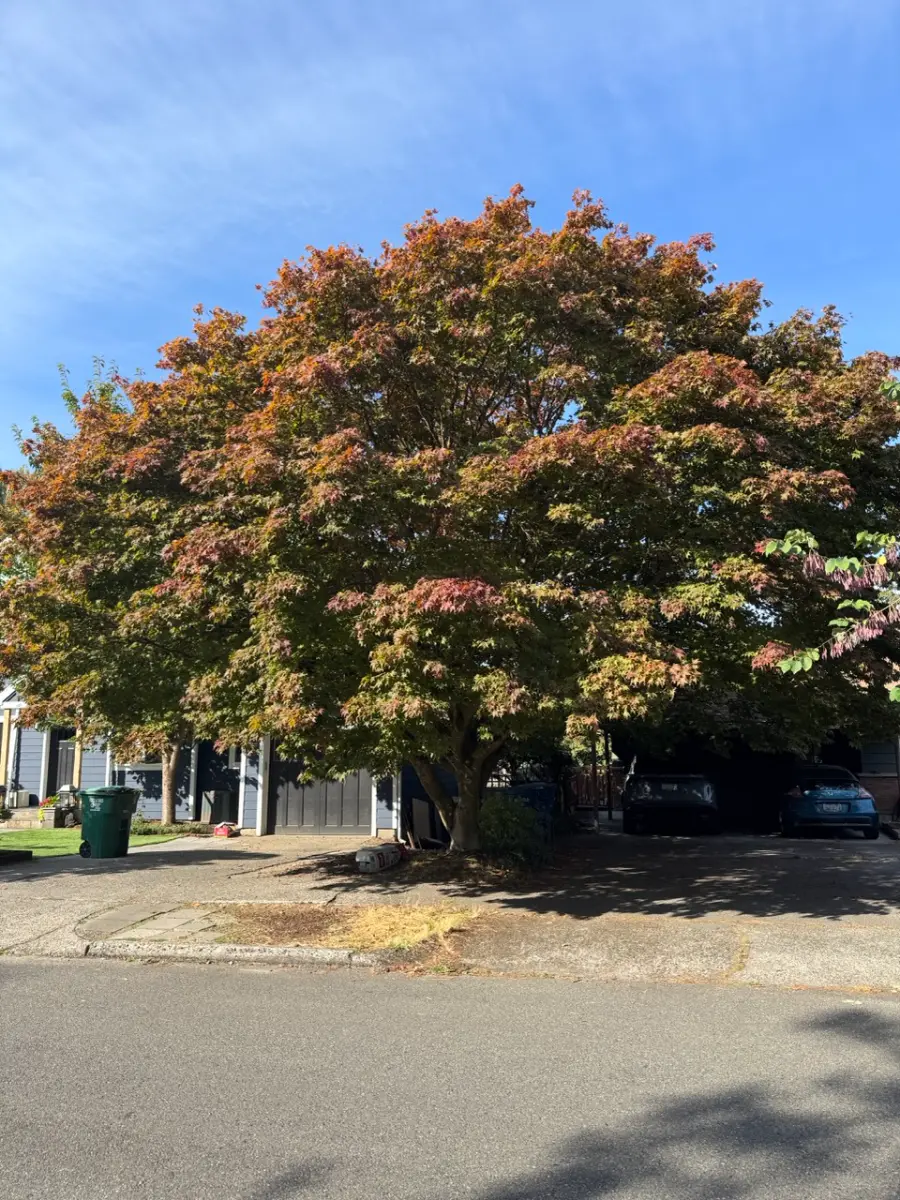
Ash trees have opposite branching (branches and buds grow in pairs directly across from each other) and compound leaves with five to nine leaflets. Mature white ash bark has a distinctive diamond-shaped pattern of ridges. In fall, white ash often turns purple-bronze. If you’re unsure, a quick identification is the first step, because only ash is attacked.
What are the signs of emerald ash borer?
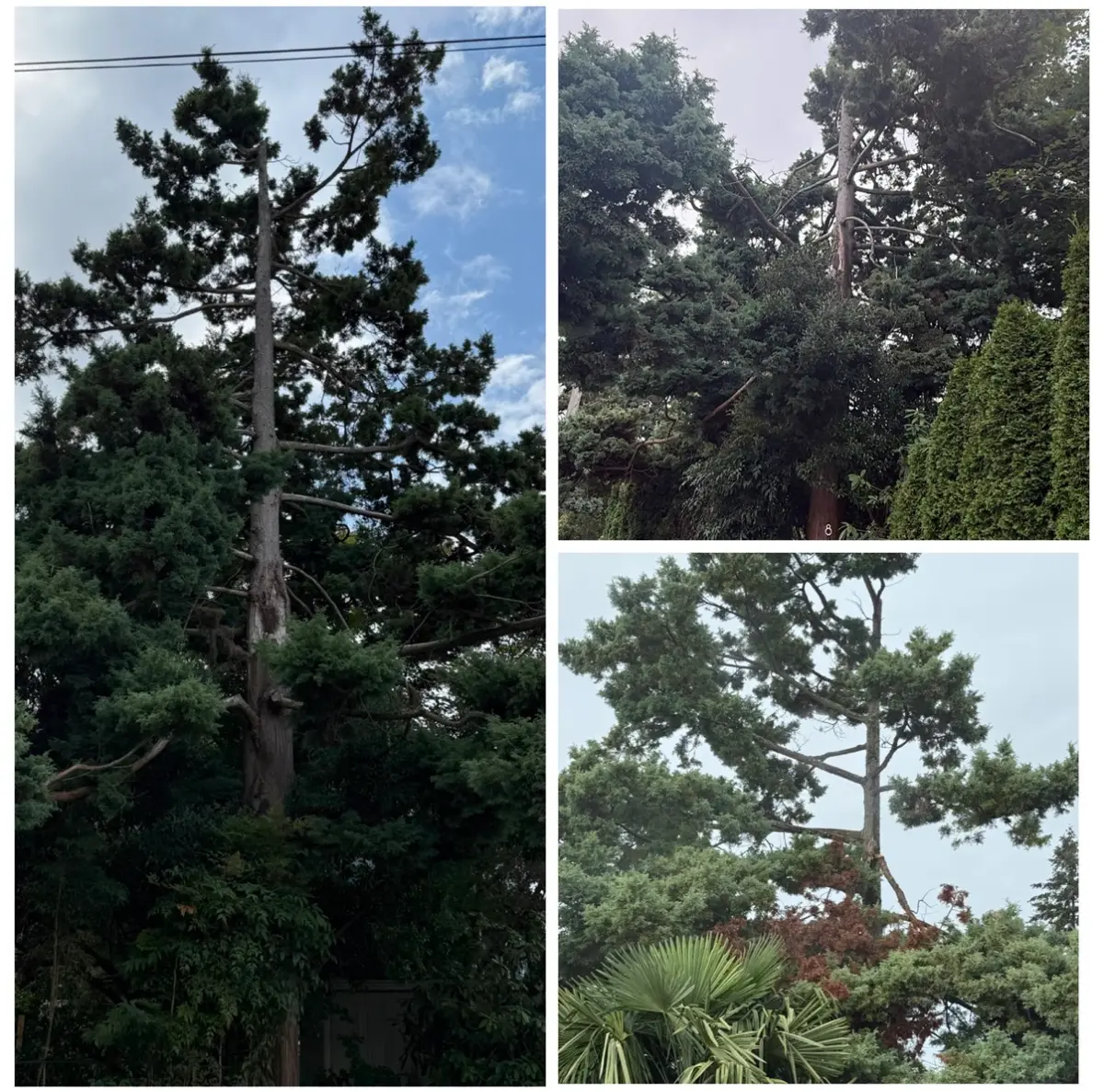
- Canopy thinning, starting at the top of the tree and spreading downward
- D-shaped exit holes, about one eighth of an inch across, in the bark
- Woodpecker damage, light-colored patches where birds strip outer bark to reach larvae (sometimes called "blonding")
- Vertical bark splits over larval galleries
- S-shaped galleries visible under loose bark
- Epicormic sprouts, clusters of shoots on the trunk and large limbs, as the tree tries to survive
Dead ash becomes dangerous quicklyAsh killed by EAB dries out and turns brittle, often within a year or two. Brittle ash is unpredictable to climb and rig, so removal becomes harder and riskier the longer it waits.
Should you treat or remove your ash?
The decision depends on the tree’s condition, its value to you and its location.
| Situation | Typical recommendation |
|---|---|
| Healthy or lightly affected ash (under about 30% crown loss), valued tree | Treatment can protect it |
| Moderate decline (around 30–50% crown loss) | Case by case; treatment success drops |
| Severe decline (over 50% crown loss) or dead | Removal |
| Ash near a house, driveway or play area that’s declining | Prioritize removal for safety |
| Ash in woods with no target nearby | Can often be left, or removed when convenient |
Treatment is a long-term commitment, because EAB pressure doesn’t go away. A protected ash needs treatment every few years for as long as you keep it.
How does emerald ash borer treatment work?
Effective treatments are systemic insecticides that the tree moves through its vascular system:
- Trunk injection with emamectin benzoate is widely considered among the most effective options and typically protects a tree for two to three years per treatment.
- Soil drenches or soil injections with imidacloprid are used on smaller trees and usually need repeating each year.
- Basal bark sprays of dinotefuran are another option for some trees.
Treatments should be applied by licensed professionals, timed to the tree’s active growing season, and chosen to minimize exposure to pollinators and the surrounding landscape. Our plant health care program includes ash protection on a schedule.
Treat before the decline is obviousTreatment works best on healthy trees. By the time you see woodpecker damage and heavy thinning, it may be too late to save the tree.
What happens when an ash is removed?
Because declining ash is brittle, removal is usually done carefully in sections, with rigging to lower wood instead of dropping it. Large ash near homes may require a lift or crane. After removal, the stump can be ground and the space prepared for a new tree. Our tree removal page explains the process, and stump grinding clears the ground afterward.
Ash wood can carry larvae, so it should stay local. Use it for firewood on site or have it chipped. Don’t transport ash firewood to other areas.
What should you plant instead of ash?
Replacing ash with a variety of species prevents a single pest from wiping out your canopy again. Good options for Andover include red maple, swamp white oak, tupelo, honeylocust, Kentucky coffeetree and disease-resistant elms. Avoid planting new ash. Our guide to the best trees to plant in Andover covers more choices.
Is emerald ash borer a problem for the whole neighborhood?
Yes. Ash along streets, property lines and woodland edges declines across a whole area at roughly the same time, which can leave several brittle trees near homes and roads at once. Coordinating with neighbors, and with the town for street trees, makes planning easier. Commercial and association properties with many ash trees benefit from a phased plan; see commercial tree service.
How much is an ash tree worth keeping?
Deciding whether to treat comes down to value and long-term commitment. A large, healthy ash that shades the house, frames the yard or would be difficult and costly to remove is often worth protecting. Mature trees provide shade, cooling, stormwater uptake and property value that a new tree takes decades to replace. Treatment every two to three years is usually far less than the cost of removing a big tree near a house.
On the other hand, small ash, ash already in serious decline, ash in poor locations, or ash in woodland areas with no targets nearby are usually better removed or left to the woods. Many owners choose a mix: protect one or two important ash trees near the house and remove the rest on a planned schedule.
What’s the timeline for an untreated ash?
Once EAB reaches an area, untreated ash typically start showing crown thinning within a few years, and decline speeds up quickly after that. By the time half the crown is gone, most trees can’t be saved. Because the beetle is already widespread in Massachusetts, it’s safest to assume any untreated ash in Andover is either infested or will be soon. Making the decision while the tree is still healthy gives you the most options.
Call to have it checked and get a clear recommendation: treat, monitor or remove.
If you’re not sure how many ash trees you have, a quick walk-around inventory is a good first step. Many people are surprised to find ash along property lines or mixed into wooded areas.
Emerald ash borer FAQs
Is emerald ash borer in Andover?
EAB is established across Massachusetts, including Essex County. Any untreated ash in Andover should be considered at risk.
Can a tree with EAB be saved?
Often, if it’s treated before it loses a large share of its crown. Trees in severe decline usually can’t be saved.
How often does treatment need to be repeated?
Trunk injections typically protect for two to three years; soil treatments usually need repeating each year.
Is EAB treatment safe?
Systemic treatments applied by licensed professionals, especially trunk injections, limit exposure. Treatment timing and product choice reduce the impact on pollinators.
Can I burn ash firewood from my tree?
Yes, on your own property. Just don’t move it elsewhere, because it can carry the beetles to new areas.
Deciding what to do with ash is one of the most common questions alongside professional tree pruning in Andover, and it’s a decision best made early.